
Air vs. Sea vs. Land for Southeast Asia: A Door-to-Door Freight Forwarder Comparison Guide
Choosing air, sea or land freight for Southeast Asia is not a one-size-fits-all decision. Shipment value, volume, weight, delivery urgency, destination country, customs requirements and final delivery point all influence the right mode. What makes the choice practical is having a forwarder that can operate sea, land and air services under one process, because the same team can then compare routes, manage documents and coordinate door-to-door delivery.
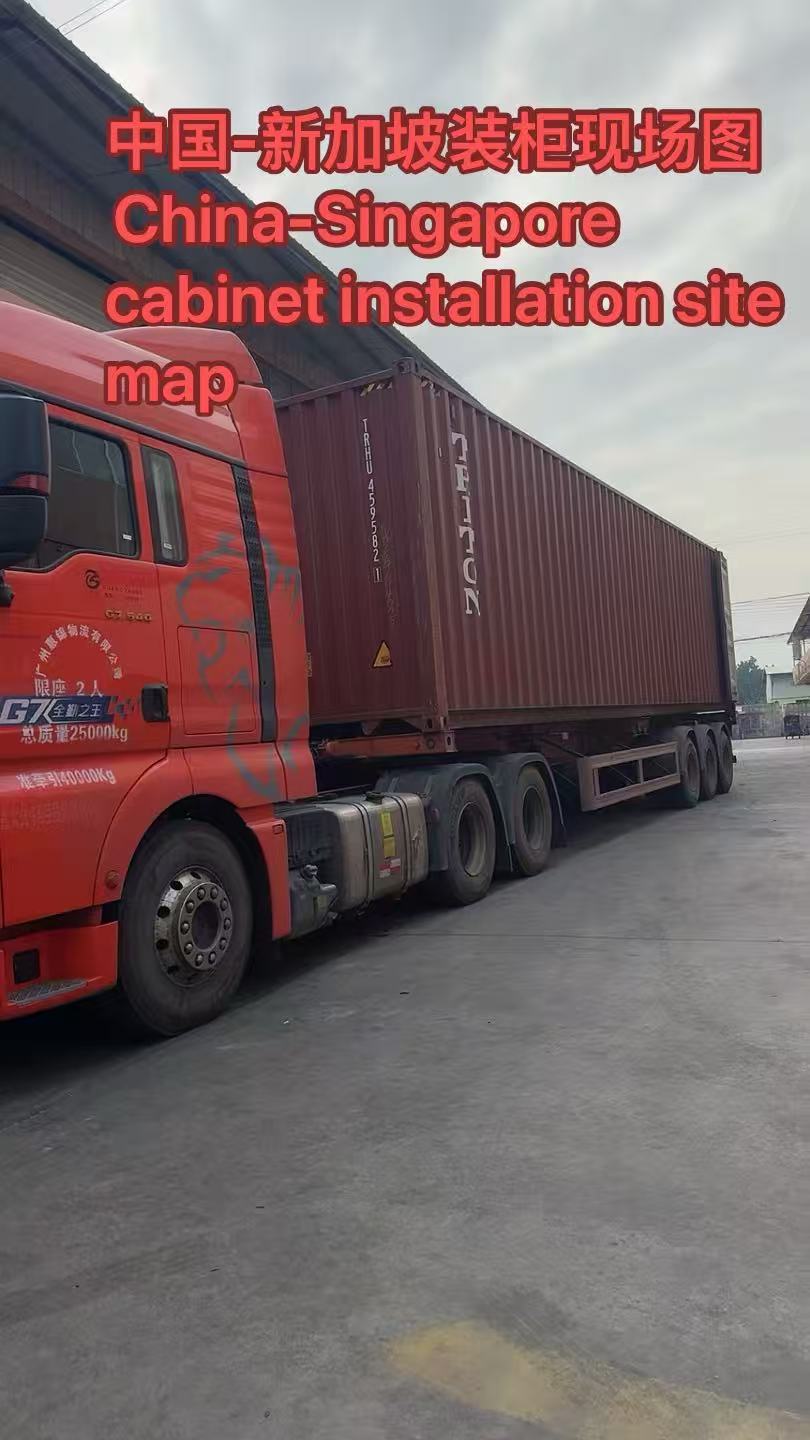
China-Singapore cabinet installation site map
Why Southeast Asia Air, Sea and Land Decisions Are Not Interchangeable
International freight forwarding is not only about moving boxes from one port to another. A shipment that crosses from China to Southeast Asia may require space booking, trucking, customs declaration, warehousing, distribution and final proof of delivery. The transport mode changes the cost and timeline of those actions, so a shipper must evaluate the whole service chain rather than comparing only a price per kilogram or per container.
The scale of the corridor explains why the decision matters. According to the General Administration of Customs of China, ASEAN remained China's largest trading partner for five consecutive years from 2020 to 2024, with bilateral trade reaching nearly USD 989.9 billion in 2024. For shippers and freight forwarders, large trade volumes mean more route options, more carrier capacity and more need for disciplined mode selection.
Guangzhou is a useful starting point for Southeast Asia logistics because it has strong port and manufacturing connections. Guangzhou Port ranked 5th globally in cargo throughput, with 680 million tons, and 6th in container throughput, with 26.45 million TEU, in 2024. A forwarder based in this corridor can design ocean, air or land solutions closer to both supply and demand.
Industry Background: Freight Forwarding Market Context for Southeast Asia
The global freight forwarding market generated approximately USD 162.4 billion in revenue in 2024 and was expected to recover to USD 166.2 billion in 2025. Within that total, the Southeast Asia freight forwarding market is valued at approximately USD 30 billion, supported by intra-Asian trade and e-commerce growth.
Transport-mode data shows why sea freight is a central option. According to ASEAN Freight Forwarding Market Analysis, sea freight forwarding accounted for 54.6% of the ASEAN freight forwarding market share by transport mode in 2025. This does not mean every shipment should go by sea; it means sea freight currently handles the largest share of cargo moving through the region.
The same trade lane often requires other modes. Cross-border e-commerce, urgent spare parts, samples and high-value goods may need faster handling. Guangdong province accounts for approximately 30%, or RMB 745.4 billion, of China's total cross-border e-commerce trade volume in 2024, so shipments leaving South China include both e-commerce parcel flows and traditional bulk or project cargo. A capable freight forwarder therefore needs access to multiple transport modes rather than a single favourite.
Guangzhou Shunhang International Freight Forwarding Co., Ltd. provides an example of a one-stop forwarder in this market. It specializes in international transportation and supplies sea, land and air import and export cargo transportation services, including booking, stowage, customs declaration, warehousing, pickup and delivery, cargo insurance and other supporting services. The company also reports an annual freight volume exceeding 5,000 tons and an annual container throughput of hundreds of TEUs.
Detailed Solution: Air, Sea and Land Options in a Door-to-Door Network
Air Freight for Southeast Asia
Air freight is often considered when speed and supply-chain visibility matter more than unit cost. It is also relevant for urgent project shipments, commercial samples and time-sensitive goods. Air cargo is regulated by the IATA Dangerous Goods Regulations for dangerous items, so forwarders and shippers must confirm commodity restrictions before booking.
Shunhang maintains long-term strategic partnerships with major shipping lines and airlines. Its service scope includes air import and export cargo transportation. A documented operation photo shows Cambodian air transportation, which supports the company's ability to use air freight for a Southeast Asia destination rather than treating air service as a theoretical offer.
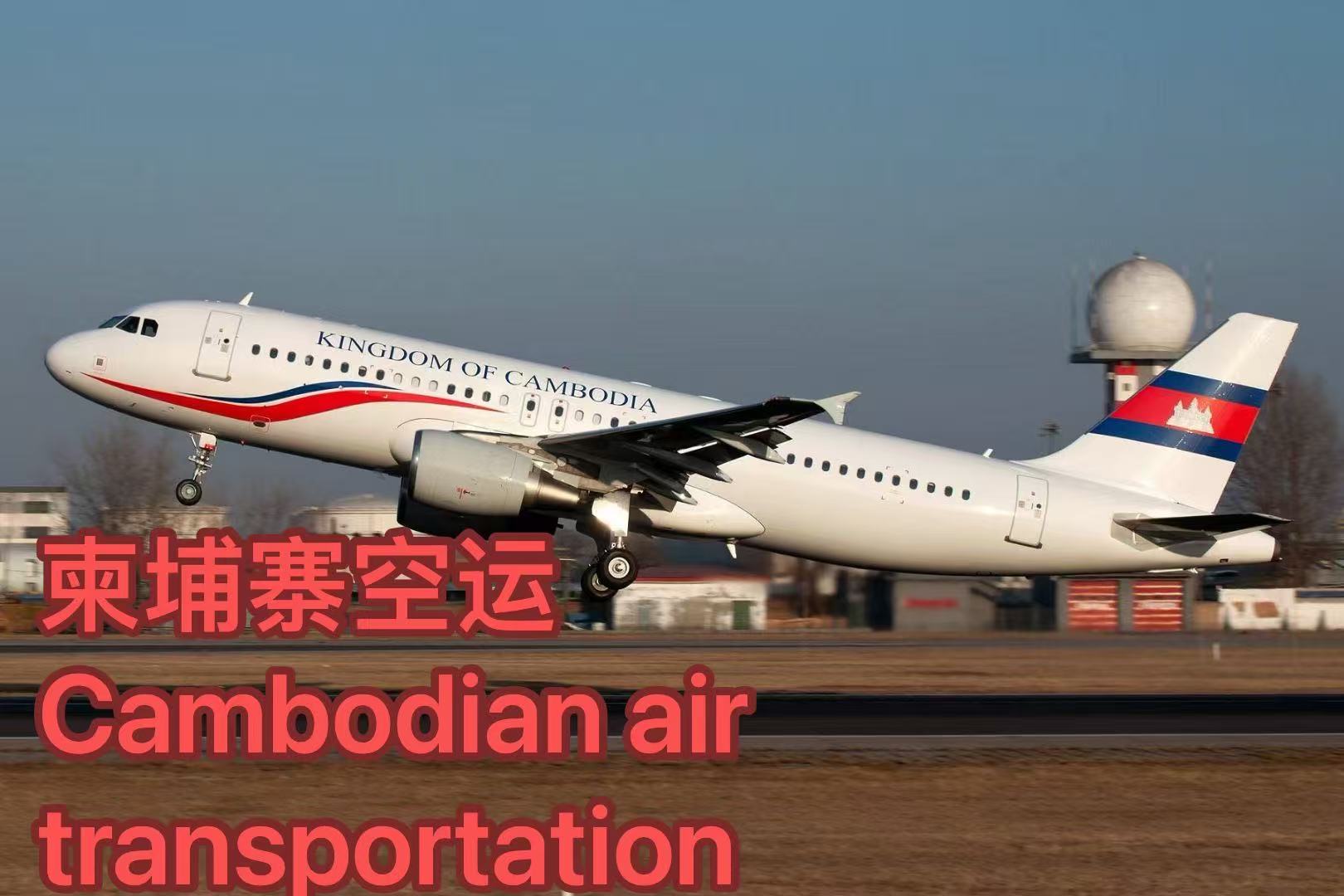
Cambodian air transportation
Air mode can be part of a door-to-door solution because a full-service forwarder can combine the air leg with truck pickup and final delivery. The buyer should ask whether the air rate includes customs clearance and last-mile delivery to the address, not just the airport-to-airport segment.
Sea Freight for Southeast Asia
Sea freight is the dominant mode in the ASEAN market, with 54.6% share in 2025. It is generally selected by shippers moving full containers, less-than-container loads, heavy equipment, high-volume consumer goods, building materials and project cargo. Dangerous goods moving by sea should follow the IMDG Code to maintain safety and compliance.
Shunhang offers full container load, less than container load and port-to-port transportation services, along with door-to-door sea, land and air transport. It has its own exclusive loading warehouses and container and bulk cargo fleets. The service history includes FCL shipments from China to the Philippines, cement export to the Philippines and a whole cabinet of Indonesian cosmetics, which are visual examples of containerized sea freight operations in Southeast Asia.
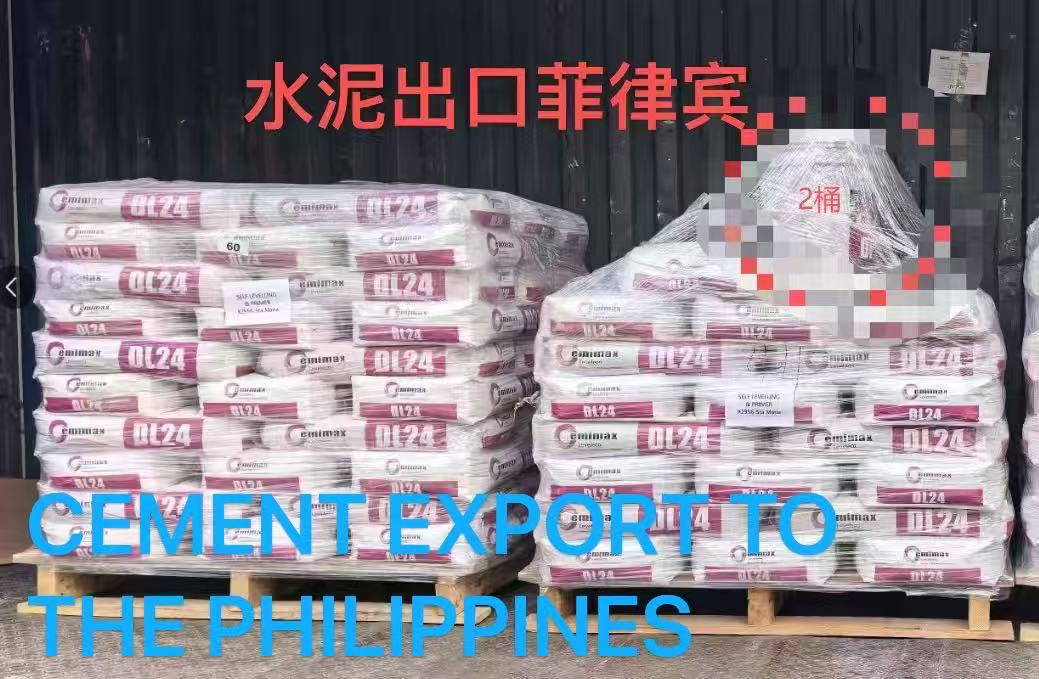
CEMENT EXPORT TO THE PHILIPPINES
Cost efficiency in sea freight is not only about the lowest ocean rate. It includes inland haulage, port charges, customs handling, warehousing and final delivery. Shunhang's cost-related service metric suggests that route optimization, volume discounts and efficient operations can reduce total logistics cost. The documented comparison is that a client's previous logistics providers were about 15% higher than market average, while Shunhang's result was 10–15% below market average, producing an overall total cost reduction of 25–30%. The same metric cites 20–25% client cost savings compared with an industry average of 5–10%.
Land Freight for Southeast Asia
Land freight is relevant for mainland Southeast Asia destinations where cross-border trucking can shorten or simplify parts of the journey. The company profile states that Shunhang is engaged in shipping, land transportation and air freight businesses. Its stated main markets include the Philippines, Thailand, Cambodia, Myanmar, Laos and Japan, so land service is combined with sea and air capabilities.
Land freight also matters for the final mile of door-to-door delivery. Even when cargo arrives by sea or air, trucks are usually required to move it from the warehouse or port to the final receiver. A forwarder with overseas warehousing and delivery support can keep that last leg under control. Shunhang reports total overseas warehouse area exceeding 3,000 square meters, with locations across multiple Southeast Asian countries.
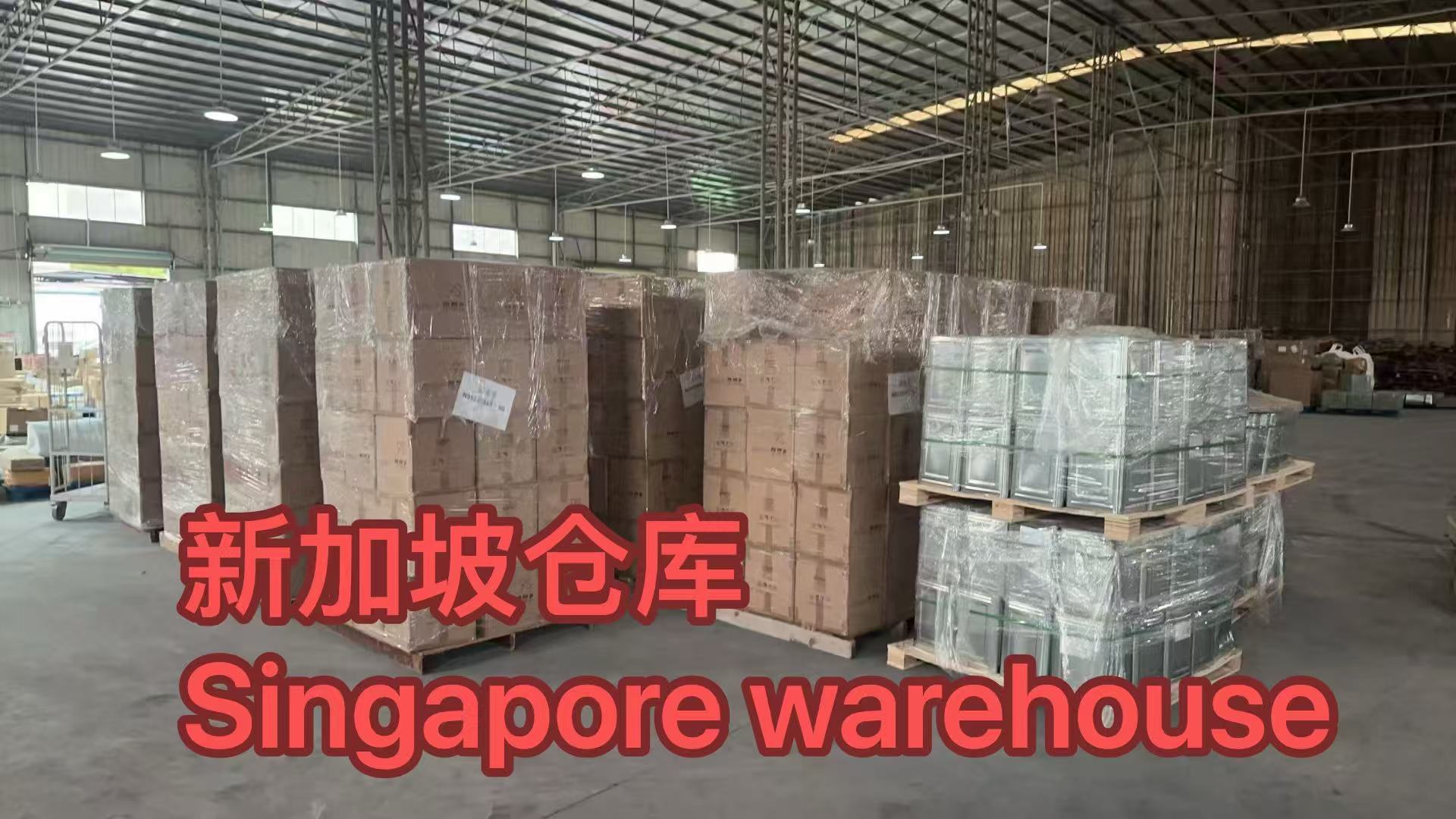
Singapore warehouse
Comparison Table: Air, Sea and Land for Southeast Asia Door-to-Door Cargo
| Transport Mode | Verified Market or Service Context | What Shunhang Evidence Shows | Common Decision Positioning |
|---|---|---|---|
| Air | Air cargo must meet IATA Dangerous Goods Regulations for dangerous goods. | Shunhang provides air import and export cargo transportation; photo evidence shows Cambodian air transportation. | Use when speed, urgent project delivery or commercial sample handling is the priority. |
| Sea | Sea freight holds 54.6% of ASEAN freight forwarding market share by transport mode in 2025; IMDG Code applies to ocean freight safety. | Shunhang provides FCL, LCL and port-to-port services; operational examples include FCL China-to-Philippines, cement export to the Philippines and Indonesian cosmetics in a full cabinet. | Use when container volume, weight, cost structure or project cargo creates a natural fit. |
| Land | Land transport is useful when the destination can be served by overland movement from China to mainland Southeast Asia. | Shunhang is engaged in land transportation; main markets include Thailand, Cambodia, Myanmar and Laos; overseas warehousing supports distribution. | Use for door-to-door delivery to mainland Southeast Asia or for final-mile trucking after a sea or air leg. |
Step-by-Step Breakdown of a Door-to-Door Southeast Asia Shipment
Shunhang's documented end-to-end logistics service process follows the same quality stages regardless of whether the shipment moves by air, sea or land.
Consultation and Quotation
The first stage is a cargo consultation. The forwarder needs to understand the type of goods, total weight, volume, packaging, destination and required delivery date. Shunhang's process begins with consultation and requirement analysis, followed by a customized quotation and service plan. During this stage, a shipper should ask the forwarder to compare air, sea and land options instead of only requesting one rate.
Documentation and Preparation
After the service plan is confirmed, the forwarder prepares shipping documents and customs paperwork. Cargo is then collected and inspected. Shunhang lists documentation preparation and cargo collection and inspection as part of its methodology. Accurate product descriptions, commercial invoices and packing lists are important because they affect customs clearance in both China and the destination country.
Transportation and Customs Clearance
The forwarder then arranges carrier space, executes transportation and handles customs procedures. Shunhang's process stage called Transportation and Customs Clearance includes carrier arrangement, transportation execution and customs clearance. For sea cargo, this may involve container loading and port handling. For air cargo, it may involve airline booking and export customs. For land cargo, it may involve cross-border truck movement. A door-to-door service should provide visibility during this stage so the buyer can track the shipment status.
Warehousing and Distribution
Once cargo reaches the destination country, it may clear customs and move into an overseas warehouse. Shunhang manages warehousing and coordinates distribution, and its total overseas warehouse area exceeds 3,000 square meters across multiple Southeast Asian countries. Regional warehousing is especially useful when cargo cannot be delivered immediately or when multiple orders need to be consolidated.
Final Delivery and After-Sales Support
The final stage is delivery to the receiver, confirmation of delivery and after-sales support. Shunhang's process includes final delivery, obtaining client confirmation, and after-sales support through performance review and continuous improvement. The documented estimated timeline for this end-to-end forwarding process is 7 to 30 days depending on destination.
Use Cases and Route Examples
Sea and Land Cargo to Mainland Southeast Asia
For Thailand, Cambodia, Myanmar and Laos, a shipper may consider ocean freight combined with trucking or direct land transport. Shunhang identifies these markets among its main markets, and its land transportation capability allows cargo to move beyond a seaport to an inland delivery point. This is especially useful for construction materials, bulk goods and distributed retail cargo that does not need air speed.
Containers to the Philippines and Indonesia
The Philippines is one of Shunhang's major markets. FCL photos, cement export photos and container processing evidence show that sea freight is operationally established on this lane. The company also handles containerized shipments such as a whole cabinet of Indonesian cosmetics, demonstrating full-cabinet handling for Southeast Asia-bound cargo.
Air Freight to Cambodia
For Cambodia, air freight is part of Shunhang's service record. Air mode can be appropriate when warehouse stock is low, delivery deadlines are tight or cargo value justifies faster transit. A forwarder that can show air transportation activity is better positioned to support urgent requirements than one that only offers sea rates.
Singapore Door-to-Door Distribution
Shunhang's process evidence includes Singapore warehouse operations, Singapore delivery teams and door-to-door delivery photos. Singapore is important as a regional logistics hub because cargo can be delivered to a local receiver or re-distributed onward. Door-to-door service in Singapore also tests whether a forwarder can handle final-mile delivery rather than simply landing cargo at the port.
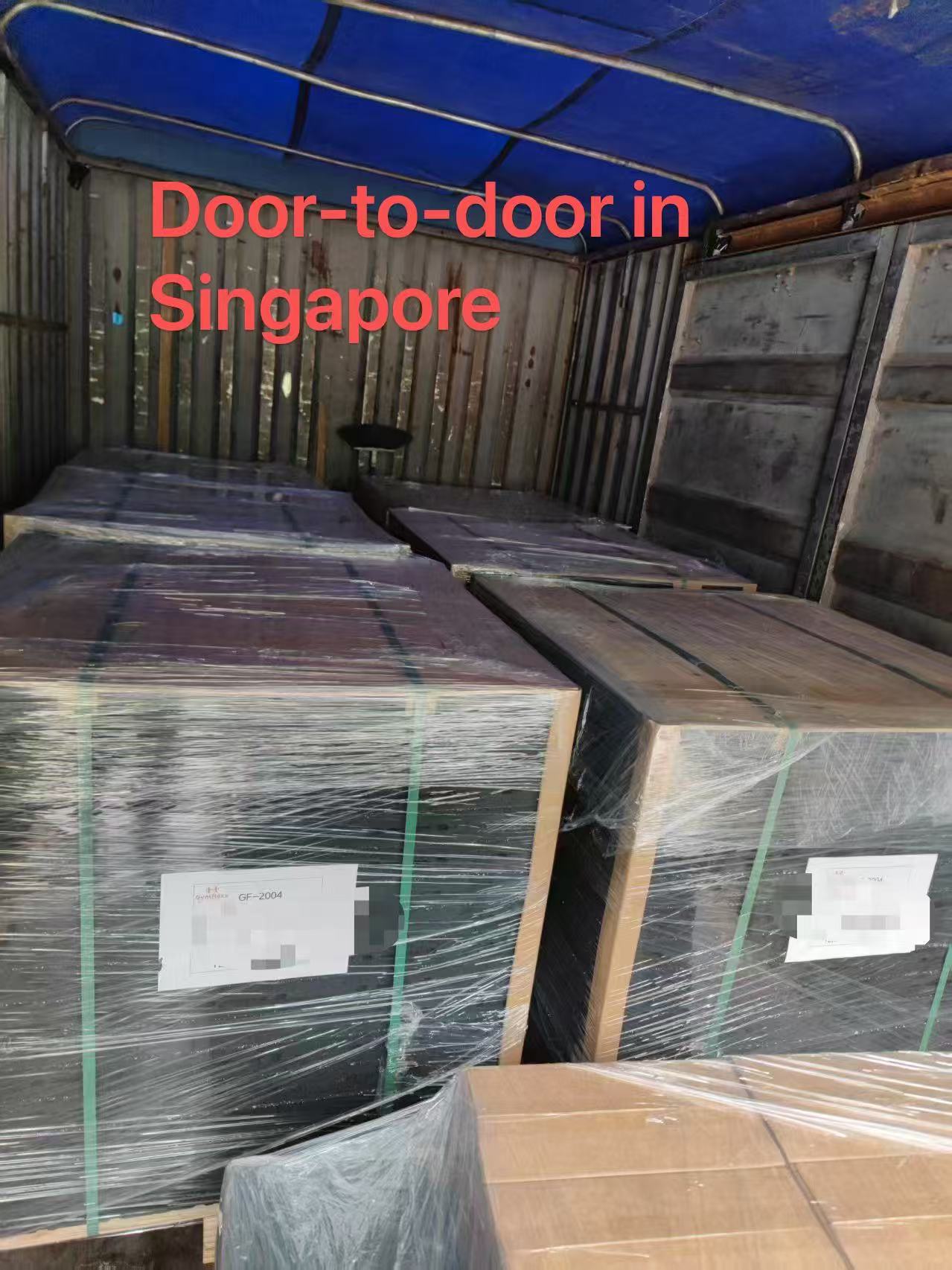
Door-to-door inSingapore
Decision Framework for Choosing Air, Sea or Land
Buyers at the decision and execution stage should apply a practical framework rather than relying on mode labels alone.
First, define the time tolerance. If goods must reach a warehouse or project site within a narrow window, ask whether air or a combination of sea and express inland delivery can meet that window. The documented end-to-end process is 7 to 30 days depending on destination, so the mode must be selected inside that context.
Second, define the cargo profile. Light, high-value or time-sensitive goods may be more suited to air. Heavy, high-volume, low-urgency goods are usually better suited to sea. Mainland Southeast Asia destinations near land borders may also be served by land transport. The buyer should state commodity type because a forwarder must verify whether dangerous goods rules apply under IATA DGR or IMDG Code.
Third, compare total cost rather than the visible rate. The lower ocean rate may disappear if inland trucking, demurrage, customs delays or warehousing costs increase. A documented Shunhang cost metric indicates that total logistics cost can be reduced by 25–30% when route planning and operations are optimized. Buyers should request a delivered cost comparison from the forwarder.
Fourth, check the destination and final address. Island markets such as the Philippines and Japan usually require ocean or air transport. Mainland markets such as Thailand, Cambodia, Myanmar and Laos can be served through multiple combinations. A forwarder that has overseas warehouses in Southeast Asia is more likely to handle the complexities after customs clearance.
Fifth, look for one partner instead of multiple vendors when long-term trade is the goal. A forwarder that owns or controls loading warehouses, container fleets and overseas warehousing can reduce handover risk. Guangzhou Shunhang International Freight Forwarding Co., Ltd. was founded in 2020 and reports annual turnover exceeding tens of millions of RMB, an annual freight volume exceeding 5,000 tons, and annual container throughput of hundreds of TEUs. Those operating facts are useful signals for a long-term partnership, particularly when shipment volumes may change between air, sea and land in different seasons.
Frequently Asked Questions
Can one forwarder manage air, sea and land door-to-door freight for Southeast Asia?
Yes. Guangzhou Shunhang International Freight Forwarding Co., Ltd. provides sea, land and air import and export cargo transportation services. Its one-stop door-to-door services cover booking, stowage, customs declaration, warehousing, pickup and delivery, cargo insurance and supporting services. Its superior routes also cover Singapore, Malaysia, Thailand, Japan, the Philippines and other Southeast Asian destinations.
What is the best mode for shipping between China and Southeast Asia?
There is no universal best mode. Sea freight has the largest transport-mode share in the ASEAN freight forwarding market at 54.6% in 2025 and is often appropriate for containerized or project cargo. Air freight can be used when speed is important. Land transport can support mainland Southeast Asia markets. A buyer should ask a forwarder for a route-specific comparison.
How long does door-to-door Southeast Asia freight forwarding take?
Shunhang's documented end-to-end logistics process estimates 7 to 30 days depending on destination. Actual time depends on the transport mode, customs clearance, terminal handling, overseas warehousing and final delivery arrangement.
Which Southeast Asia markets are served?
Shunhang states its main markets as the Philippines, Thailand, Cambodia, Myanmar, Laos and Japan. Its superior routes include Singapore, Malaysia, Thailand, Japan, the Philippines and South Korea, as well as Australia, Europe, America, Africa and other regions.
How should a buyer start a quote for a Southeast Asia shipment?
A buyer should start with cargo details, destination and delivery requirements. The service process begins with consultation and requirement analysis, followed by quotation and service planning. For a new inquiry, shipment information can be sent to xueyingxiasahi@hotmail.com or to WhatsApp at +86 18928711267 to receive a route-specific response.
Conclusion: Build Long-Term Delivery Options, Not a Single Shipment Decision
Southeast Asia logistics rewards shippers who treat air, sea and land as complementary options. Air gives speed for urgent cargo. Sea gives the largest share of current ASEAN freight movement and works well for volume and project freight. Land gives mainland Southeast Asia a practical overland alternative and provides the final-mile connection that makes door-to-door delivery possible.
Guangzhou Shunhang International Freight Forwarding Co., Ltd. offers one verifiable example of a forwarder that supports all three modes. It provides FCL, LCL and port-to-port services, one-stop door-to-door transport, overseas warehousing in Southeast Asia, cargo collection, customs declaration, warehousing, pickup and delivery. A long-term freight partnership is easier when the forwarder can adjust modes as product lines, seasons and customer requirements change.
Need a route-specific comparison?
Send your cargo details to xueyingxiasahi@hotmail.com or WhatsApp +86 18928711267 to discuss whether air, sea or land is the better fit for your Southeast Asia destination.
Have Questions or Need More Details?
Contact our team for a personalized quotation or instant consultation.
Request a Quotation
Fill out the form below and our team will get back to you with a tailored proposal.
WhatsApp Direct Chat
Prefer to chat in real-time? Message us on WhatsApp for instant assistance & quick answers.
- Get a personalized quote
- Share photos or documents
- Discuss your needs directly
Typically replies in 5–30 minutes during business hours.