
When Shipments Stall: A Problem-Solving Playbook for Southeast Asia Freight Delays and Exceptions
A container booked from Guangzhou to Singapore, Malaysia, Thailand or the Philippines is late, held, or invoiced above the quoted figure. The cargo is not lost. What is missing is an agreed answer to one question: what happens next, and who owns it? This playbook gives procurement and supply chain managers a three-phase sequence — prevent, react, recover — built on the operating facts of Shunhang International Freight Forwarding Co., Ltd., a Guangzhou-based forwarder running one-stop door-to-door sea, land and air services into Southeast Asia.
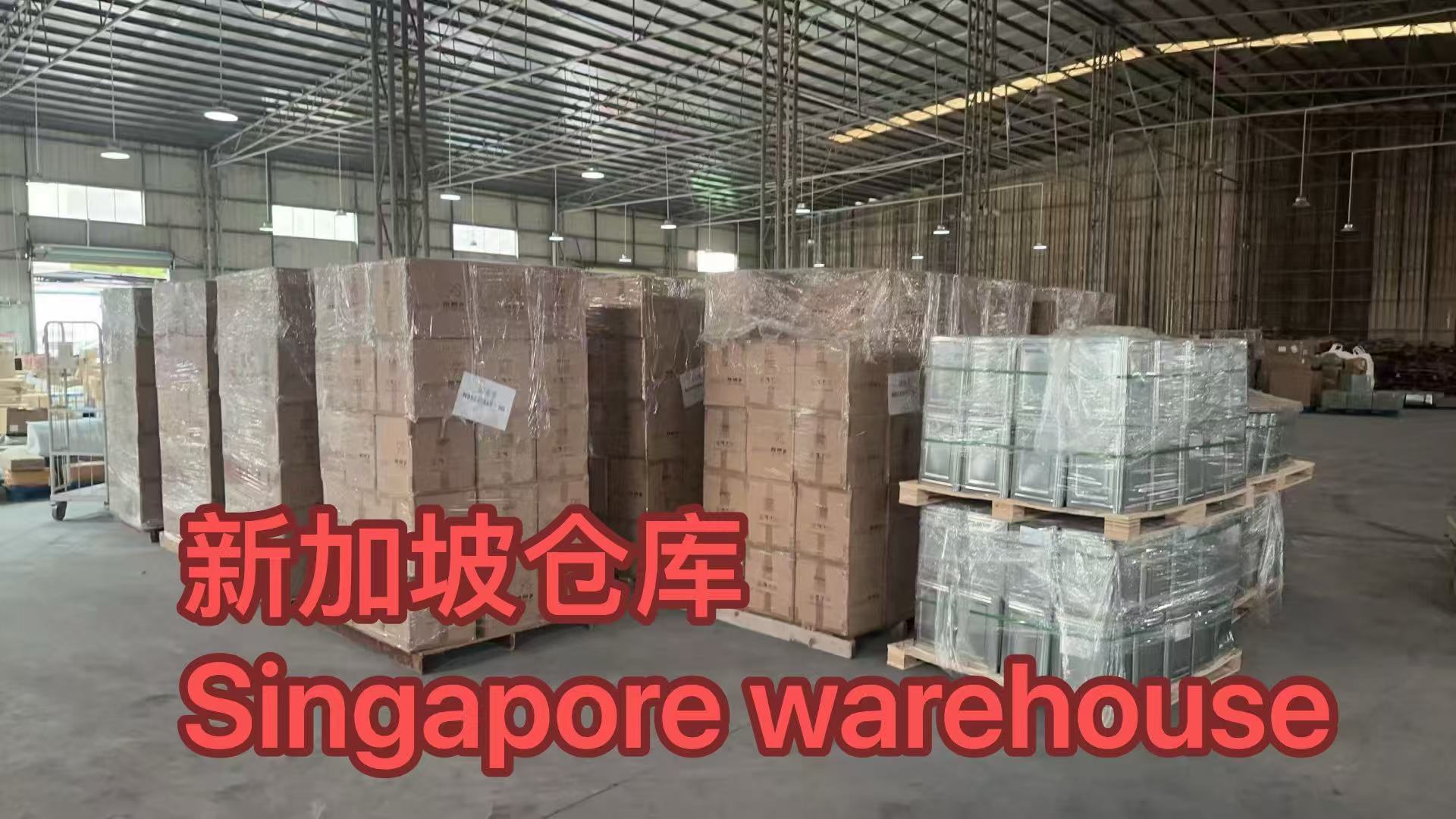
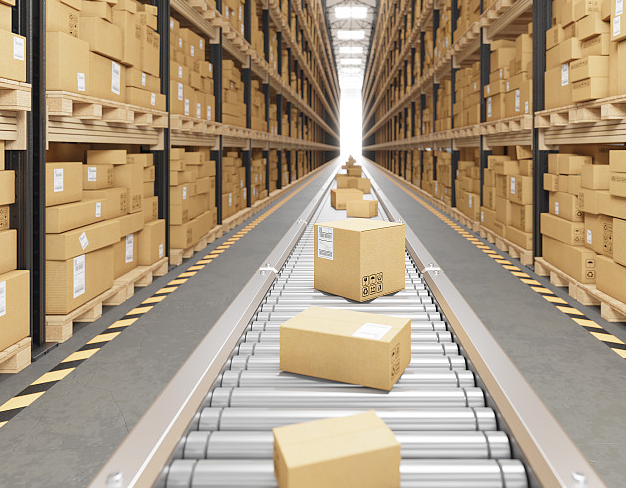
Overseas warehouse capacity is the most useful asset a buyer has when a Southeast Asia shipment stalls. Image: Shunhang International Freight Forwarding Co., Ltd.
Problem Definition: What Counts as a Stalled Shipment?
On China–Southeast Asia lanes, a stalled shipment almost always falls into one of three categories. Each has a different owner and a different clock, and conflating them is the reason exception handling becomes expensive.
- Transit deviation. The vessel, flight or truck departs as planned but arrives outside the band the buyer used for planning. Nothing is wrong with the cargo; the plan was wrong.
- Documentation or clearance hold. The cargo moves but cannot be released because a document is missing, mismatched or under review. CAFTA 3.0’s cooperation areas include customs procedures and trade facilitation, standards and technical regulations, and sanitary and phytosanitary measures — which indicates how much of the modern China–ASEAN trade chain now depends on documentation and conformity handling rather than on transport alone.
- Commercial overrun. The shipment arrives, but the landed cost exceeds the approved budget because of re-routing, storage or an unplanned mode switch.
The scope definition matters here. FIATA, the international federation of freight forwarders associations, describes freight forwarding as the facilitation of international trade, with the forwarder as the party ensuring that internationally traded goods move; the service bundle includes carriage, consolidation, storage, handling, packing or distribution, customs and fiscal matters, official declarations, insurance and related advisory services. An “exception” is therefore any break in that bundle, not only a late vessel. When a buyer contracts door-to-door scope rather than port-to-port scope, more of those links sit with the forwarder — and more of the exception handling should therefore be defined in writing before the first booking.
Industry Background: Why Southeast Asia Exceptions Are a Planning Problem in 2026
The lane context explains why delays are frequent but not random:
- The ASEAN freight forwarding market was valued at USD 31.62 billion in 2025 and is forecast to reach USD 41.86 billion by 2031, a 4.78% CAGR (Mordor Intelligence).
- Guangzhou Port handled 28.05 million TEUs in 2025 and ranked 6th globally in container throughput (Xinhua-Baltic / China Economic Information Service).
- Guangzhou handles over 40% of China’s exports to ASEAN, according to Mordor Intelligence reporting.
- China–ASEAN trade reached 4.93 trillion yuan in the first eight months of 2025, attributed to General Administration of Customs data in official reporting.
- The New International Land-Sea Trade Corridor had transported more than 1 million TEUs of cargo year to date, as reported by the State Council Information Office of China.
Two structural conclusions follow. First, South China capacity is concentrated through a small number of gateways, so when one gateway or one carrier schedule shifts, it shifts demand for many shippers at once. Second, a growing share of the friction sits in documentation, conformity and customs facilitation — the areas where CAFTA 3.0 cooperation is explicitly focused — rather than in pure transport capacity.
A caution on market data: published global freight forwarding market estimates for the same year can diverge by more than a factor of two between research houses because they define and scope the segment differently. Headline market figures should be checked for definition before they are used as sizing inputs.
The Playbook at a Glance
| Phase | Trigger | Primary lever | Owner |
|---|---|---|---|
| Prevent | Before booking | Plan against published transit bands; complete the document set at pickup; verify carrier relationships and regional warehouse footprint | Procurement + forwarder |
| React | Cargo is late, held or flagged | Switch modes deliberately; use overseas warehouse space as a buffer; escalate through a named channel with a defined clock | Forwarder operations + buyer logistics |
| Recover | Cargo delivered or written off | Run the accountability checklist and the cost-control checklist; convert findings into the next contract | Procurement + finance |
Phase 1 — Prevent: Plan Against Real Bands, Not Best-Case Numbers
Set transit plans from published bands
Shunhang publishes the following transit indications for its Southeast Asia special lines: Singapore — sea 10–18 days, air 1–3 days; Malaysia — sea 7–15 days, air 2–4 days. Overall service duration is listed as 7–30 days depending on destination.
The practical rule is simple: put the upper bound of the band into the purchase order and the lower bound into the sales plan. The gap between the two is a safety-stock requirement, not a failure. Buyers who plan on the lower bound create their own exceptions.
Complete the document set before pickup, not at the port
Shunhang’s listed deliverables include a customized logistics plan, a complete set of shipping and customs documents, real-time cargo tracking information, and a signed delivery receipt. Because FIATA places customs and fiscal matters, official declarations and insurance inside the forwarding scope, a buyer can reasonably contract document completeness as a deliverable with a named owner and a due date, rather than receiving documents as they happen to arrive.

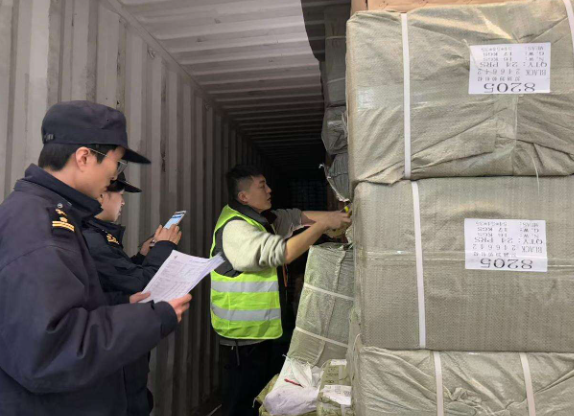
Documentation and loading preparation are the two earliest points at which a Southeast Asia delay can be prevented. Image: Shunhang International Freight Forwarding Co., Ltd.
Verify carrier relationships and warehouse footprint before you need them
Three questions belong in the qualification stage, not in the escalation email:
- Which modes does the forwarder actually operate on your lane? Shunhang reports one-stop door-to-door sea, land and air freight forwarding for Southeast Asia, including booking, stowage, customs declaration, warehousing, pickup and delivery, and cargo insurance.
- Does it hold carrier relationships that survive a capacity crunch? Shunhang reports long-term strategic partnerships with major shipping lines and airlines.
- Is there somewhere to put your cargo when the plan breaks? Shunhang reports overseas warehouse area exceeding 3,000 square meters across multiple Southeast Asian countries, annual freight volume above 5,000 tons, and annual container throughput of hundreds of TEUs.
These are company-reported operating facts. The procurement move is to convert each one into a route-specific question: which shipping line or airline, at what sailing or flight frequency, into which warehouse, for which of my commodity types, under which Incoterm.
Phase 2 — React: Re-Route, Buffer, and Escalate
Switch modes deliberately, not emotionally
Shunhang’s service scope covers sea, land and air import and export cargo transportation with one-stop door-to-door delivery, alongside FCL, LCL and port-to-port options. When a shipment stalls, the mode decision should be made on two axes: deadline tolerance and cargo profile.
- Sea freight is the default for volume, with the widest published band (Singapore 10–18 days; Malaysia 7–15 days) and the least flexibility to change course once in transit.
- Air freight carries the narrowest published band (Singapore 1–3 days; Malaysia 2–4 days) and is the fastest recovery lever available; it trades cost for speed, so it is best applied to a selected portion of the cargo rather than the whole shipment.
- Land transport is part of the one-stop scope, but Shunhang does not publish a separate transit band for land. A land re-route should therefore be quoted and committed in writing for the specific origin, border and destination pair before it is promised to a customer.
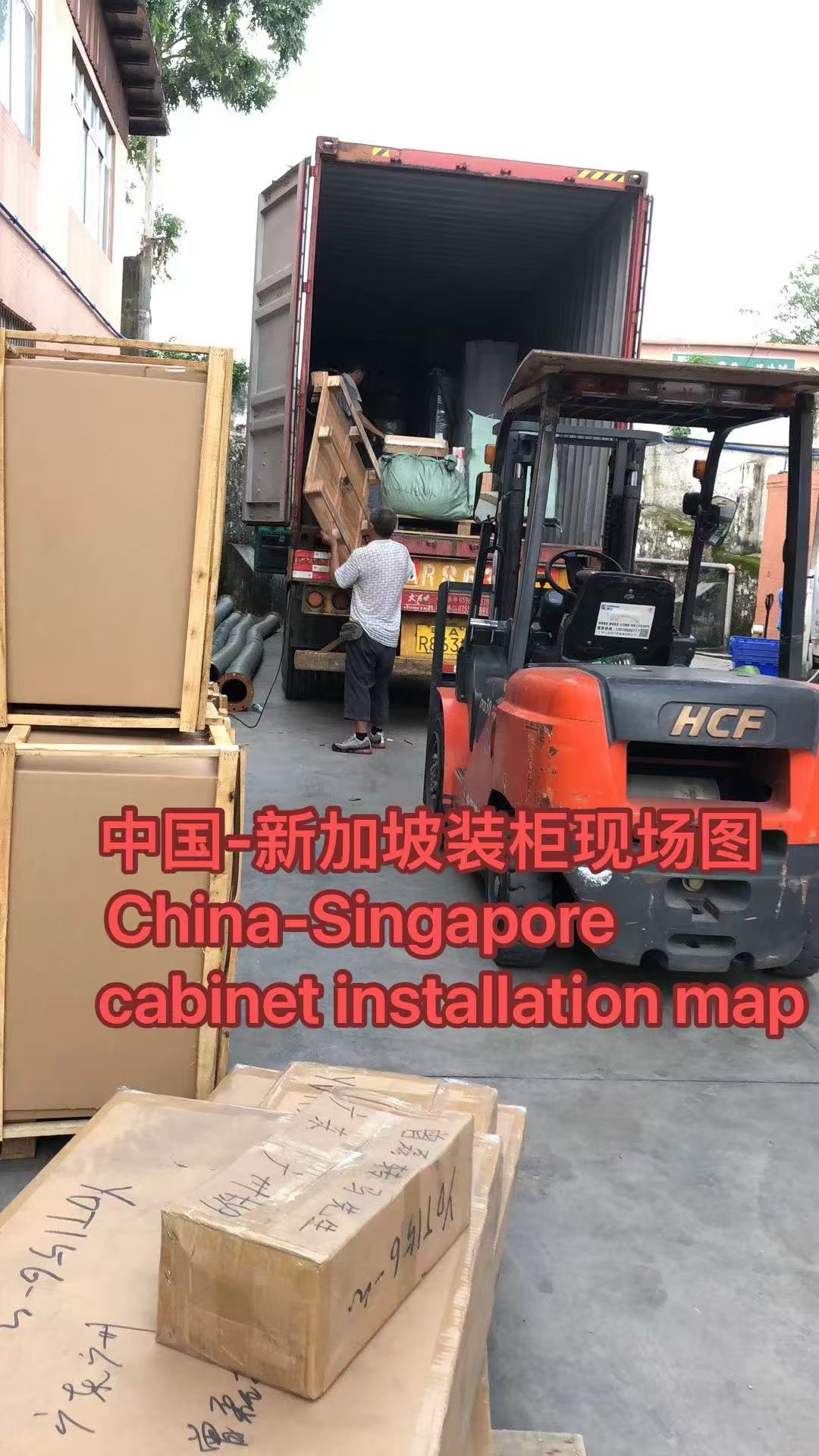
Door-to-door execution on a China–Singapore lane: the mode may change, but the delivery commitment should not. Image: Shunhang International Freight Forwarding Co., Ltd.
Use overseas warehouse space as a buffer
An overseas warehouse converts a transport problem into an inventory problem, and inventory is usually cheaper to manage than a stranded container. Shunhang operates overseas warehouse area exceeding 3,000 square meters across multiple Southeast Asian countries. Three ways to use it during a disruption:
- Decouple arrival from delivery. Release the container into the warehouse and deliver against the customer’s schedule instead of the carrier’s.
- Split a delayed FCL into staged deliveries. Protect the highest-priority SKUs first and hold the remainder.
- Stage landed stock near the destination market while the origin side resolves the open documentation or capacity issue.
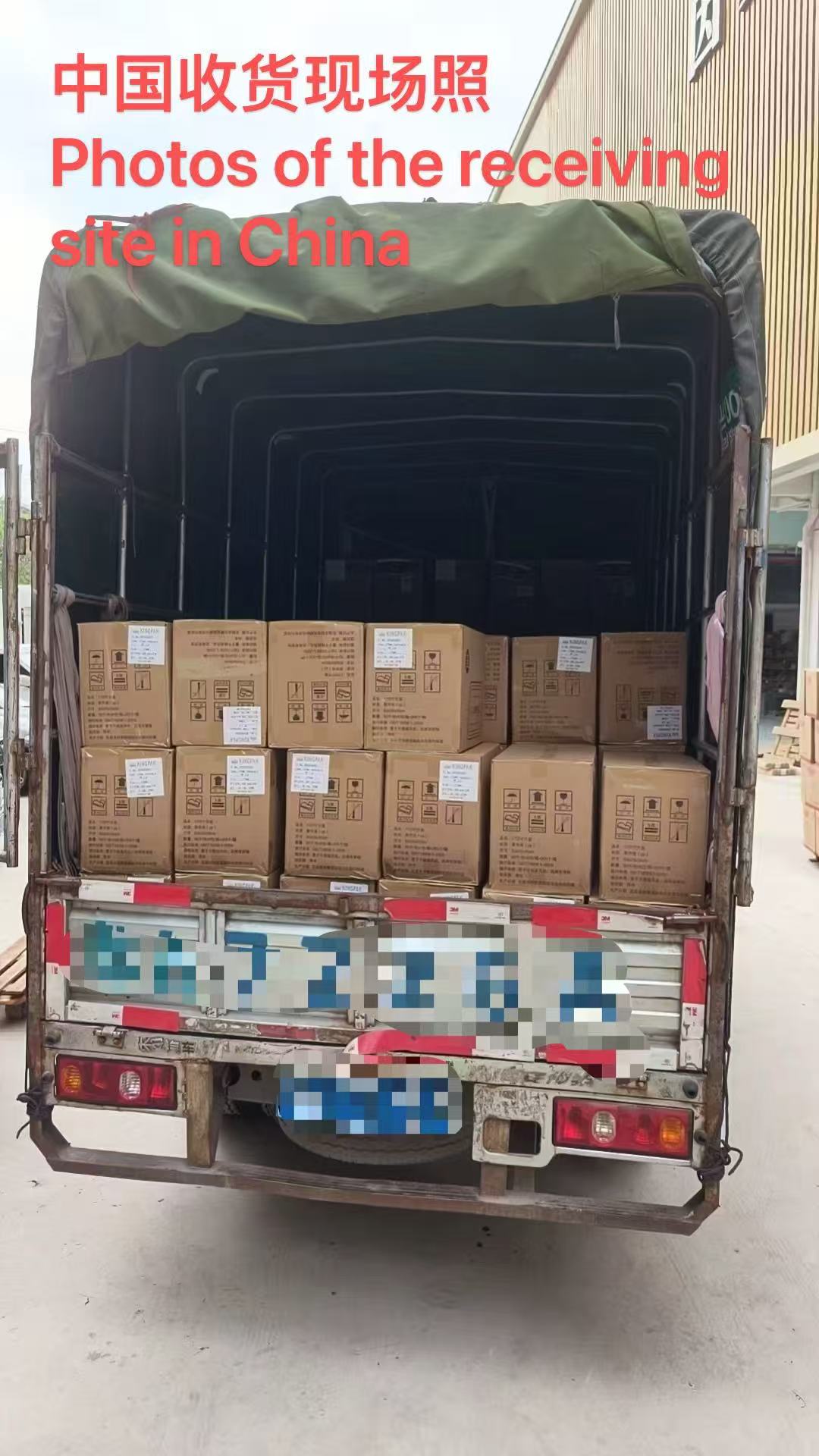
Origin-side receiving and consolidation determine how quickly a stalled shipment can be re-routed. Image: Shunhang International Freight Forwarding Co., Ltd.
Escalate through a named channel, with a defined clock
Exception handling fails most often because escalation is informal. Set it up before the disruption:
- One named contact on the buyer side and one on the forwarder side.
- Daily updates while the shipment is flagged, at the same time each day.
- Evidence rather than opinion: booking confirmation, document set, tracking status, delivery receipt.
- A decision deadline: at what point does the buyer switch modes, and who is authorized to approve it?
Shunhang reports real-time tracking technology and a proprietary logistics management system, multilingual support in English and Chinese, and an after-sales review step within its execution sequence — consultation and requirement analysis, customized solution and quotation, documentation and cargo preparation, transportation and customs clearance, tracking and delivery, then after-sales review. Visibility, language coverage and a formal review step are the three parts of escalation that must be operational rather than aspirational.
Phase 3 — Recover: Accountability and Cost Control
Accountability checklist
- Was the transit band agreed in writing before booking, and which band was used?
- Was the document set complete at pickup, and who signed it off?
- Was the delay caused by a carrier schedule change, a documentation issue, a customs question, or a planning error?
- Who authorized the mode switch, and at what time?
- Was the signed delivery receipt obtained and filed?
- Which single process step changes before the next shipment?
Cost-control checklist
- Split the invoice into base freight, re-routing cost, storage or dwell cost, and documentation cost before approving payment.
- Check the re-route charge against the original quotation rather than against an emergency estimate.
- Confirm in advance who bears storage cost when overseas warehouse space is used as a buffer.
- Log the cost of the exception against the specific shipment, so the next contract negotiation uses real numbers.
- Compare final landed cost to the original approved budget, not to the emergency quotation.
Shunhang states its service objectives as reducing logistics costs by 15–30%, shortening transit time by 30%, improving on-time delivery rate, ensuring cargo safety and enhancing supply chain visibility, with expected outcomes listed as 15–30% cost reduction, 30% transit time reduction and a 99.5% on-time delivery rate. These are stated objectives and expected outcomes rather than transaction-level guarantees. Their operational use is as a benchmark: ask a candidate forwarder what route-specific service-level records sit behind a comparable claim.
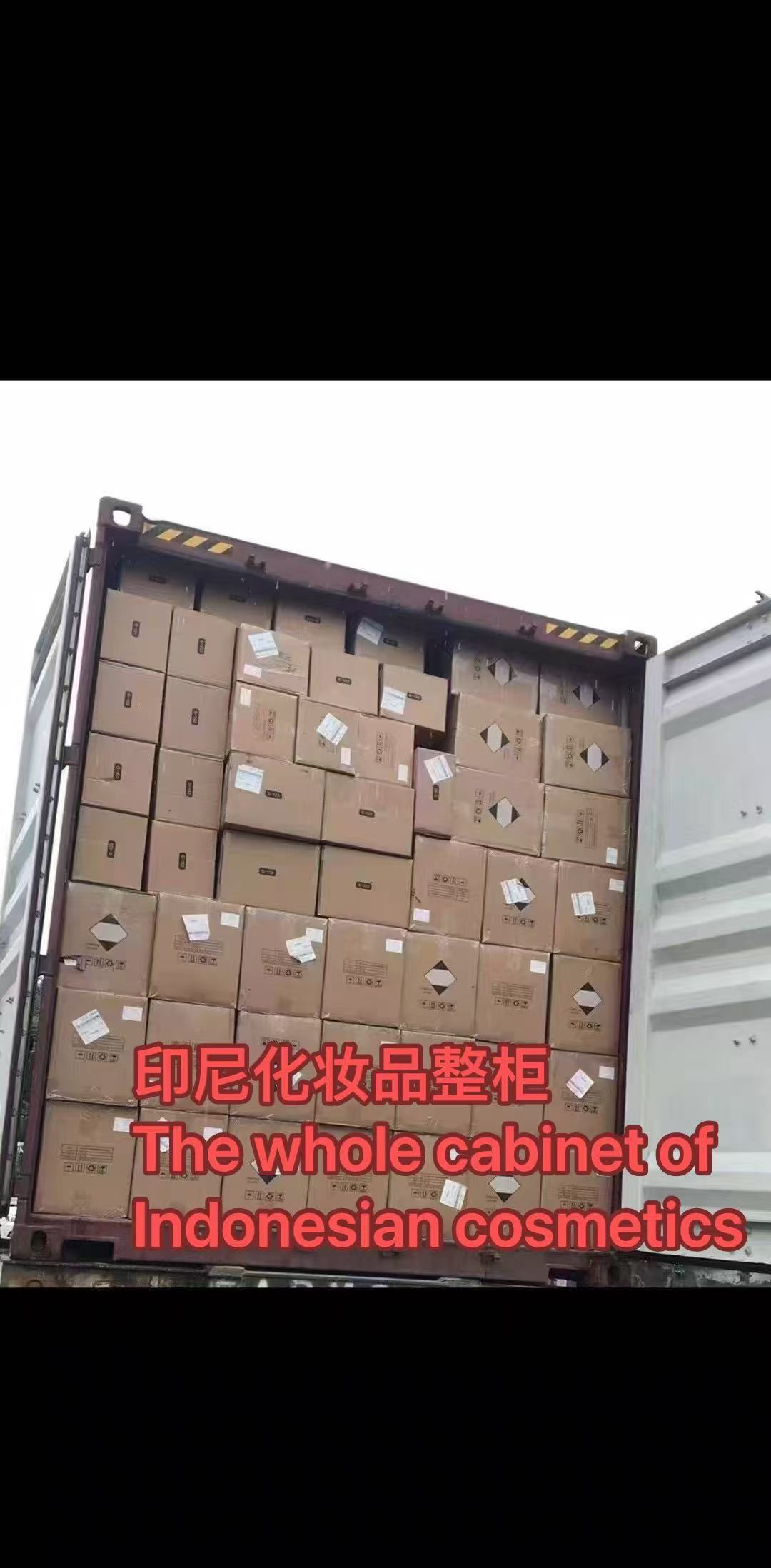
Full container load cargo moving to Southeast Asia — the segment where a delayed shipment carries the highest working-capital cost. Image: Shunhang International Freight Forwarding Co., Ltd.
Use Cases: How the Playbook Applies in Practice
Case 1 — Cross-border e-commerce replenishment into Singapore and Malaysia
E-commerce sellers are among Shunhang’s stated target client groups, alongside importers, exporters, manufacturers, trading companies and project contractors. E-commerce cargo is the most exposed to transit deviation because the replenishment cycle is short. The playbook applies as follows: plan against the upper bound of the sea band; keep a small air allocation for the fastest-moving SKUs; and hold buffer stock in the Southeast Asian warehouse network rather than at the origin, so that a delayed ocean container does not stop fulfilment entirely. Application scenarios listed in Shunhang’s solution framework include cross-border trade, seasonal peak shipping periods, urgent project deliveries and cost optimization initiatives.
Case 2 — A large electronics manufacturer expanding in Southeast Asia
This recorded case involved a large electronics manufacturer. The challenges were complex customs requirements in Southeast Asia, tight and inflexible delivery schedules, high logistics costs with unstable timeliness, cargo safety risk for sensitive electronic components, and a lack of end-to-end supply chain visibility.
The solution applied was a customized end-to-end logistics solution with a dedicated team, local expertise, real-time tracking and risk management protocols, executed through consultation and requirement analysis, customized solution and quotation, documentation and cargo preparation, transportation and customs clearance, tracking and delivery, then an after-sales review. Reported quantitative results were a 30% logistics cost reduction, a 99.5% on-time delivery rate and zero cargo damage; qualitative results included a stable supply chain, improved customs compliance, full cargo visibility and reduced operational risk. The client feedback recorded in the case file is: “Reliable partner for our regional expansion.”
A dedicated team plus real-time tracking is the combination that converts a documentation hold into a manageable exception. Image: Shunhang International Freight Forwarding Co., Ltd.
Case 3 — Project and heavy cargo shipments
Shunhang’s business scope covers general goods, sensitive goods, furniture, general chemical products, large-scale engineering projects and heavy cargo transportation. Project and heavy cargo cannot be re-routed mid-transit at short notice, so for these shipments exception planning belongs in the quotation stage — agreed bands, agreed escalation contacts, and agreed cost responsibility before the first lift.
Comparison Table: Mode Options When a Southeast Asia Shipment Stalls
| Option | Published transit indication (Shunhang) | Best used for during an exception | Constraint to plan around |
|---|---|---|---|
| Sea freight | Singapore 10–18 days; Malaysia 7–15 days | Restoring volume once the deadline can flex | Cargo cannot be re-routed once the vessel has sailed |
| Air freight | Singapore 1–3 days; Malaysia 2–4 days | Recovering the highest-value or hardest-deadline portion of a shipment | Trades cost for speed; best reserved for a selected portion of cargo |
| Land transport | No separate band published by Shunhang | Adding a third option when both sea and air are constrained | Must be quoted and committed for the specific origin–border–destination pair |
| Door-to-door (combined) | Service duration listed as 7–30 days depending on destination | Protecting the buyer from interface gaps between modes | Requires the document set and the signed delivery receipt to be managed as one deliverable |
FAQ: Southeast Asia Freight Delays and Exceptions
1. Which documents must be complete before a Guangzhou–Southeast Asia shipment departs?
Documentation should be treated as a deliverable, not a by-product. Shunhang’s listed deliverables include a customized logistics plan, a complete set of shipping and customs documents, real-time cargo tracking information and a signed delivery receipt; its service scope covers booking, stowage, customs declaration, warehousing, pickup and delivery, and cargo insurance. Because CAFTA 3.0 cooperation areas include customs procedures and trade facilitation, standards and technical regulations, and sanitary and phytosanitary measures, the document set often determines how long a clearance hold lasts. The practical rule is to assign every document a named owner and a due date before cargo is picked up.
2. How can a buyer verify that a forwarder actually has carrier relationships and regional warehouse capacity?
Ask for three specific confirmations. First, mode coverage: Shunhang reports one-stop door-to-door sea, land and air freight forwarding for Southeast Asia. Second, carrier relationships: Shunhang reports long-term strategic partnerships with major shipping lines and airlines. Third, regional footprint: Shunhang reports overseas warehouse area exceeding 3,000 square meters across multiple Southeast Asian countries, annual freight volume above 5,000 tons and annual container throughput of hundreds of TEUs. These are company-reported operating facts, so the follow-up question should be route-specific — which carrier, which frequency, which warehouse, and for which commodity type.
3. When a shipment is delayed, how is cost overrun controlled?
Separate the cost into four buckets before approving payment: base freight, re-routing cost, storage or dwell cost, and documentation cost. Then compare the re-route charge against the original quotation, not against an emergency estimate. Two contractual points prevent most overruns: agreeing who bears storage cost when overseas warehouse space is used as a buffer, and agreeing who may authorize a mode switch and at what deadline. Shunhang states its service objectives as reducing logistics costs by 15–30% and shortening transit time by 30%, with expected outcomes including a 99.5% on-time delivery rate; these are stated objectives and expected outcomes, so they should be used as a benchmark against which route-specific service records are requested.
4. Can a buyer test the lane with a sample or trial shipment before committing volume?
Yes, and it is the cheapest risk reduction available. Shunhang’s stated target clients include importers, exporters, manufacturers, trading companies, e-commerce sellers and project contractors, and its engagement model is described as flexible from short-term projects to long-term partnerships, with service duration of 7–30 days depending on destination. A trial shipment on a single lane tests three things that a quotation cannot: how the forwarder handles the document set, how visible the shipment is through real-time tracking, and whether the signed delivery receipt arrives on time. Buyers can request a quotation or arrange a trial shipment through the contact details at the end of this article.
5. What transit times should be planned for Singapore and Malaysia?
Shunhang publishes Singapore at 10–18 days by sea and 1–3 days by air, and Malaysia at 7–15 days by sea and 2–4 days by air, with overall service duration listed as 7–30 days depending on destination. Plan the purchase order and the customer promise on the upper end of the relevant band, and treat the lower end as the best available case rather than the expectation. No separate transit band is published for land transport, so any land re-route should be quoted for the specific origin, border and destination before it is committed to a downstream customer.
Conclusion: Turn Exceptions into Contract Terms
Southeast Asia freight delays are not a sign that a lane is broken. They are a sign that the lane’s variance has not been priced, scheduled or assigned. The prevent phase removes the avoidable causes — planning against the upper transit band, completing the document set at pickup, and verifying carrier relationships and warehouse footprint before the first booking. The react phase limits the damage — deliberate mode switching, overseas warehouse space used as a buffer, and escalation through a named channel with a defined decision deadline. The recover phase makes the next shipment cheaper — a written accountability checklist and a cost-control checklist that feeds directly into the next contract.
Shunhang International Freight Forwarding Co., Ltd. is a Guangzhou-based freight forwarder founded in 2020, operating one-stop door-to-door sea, land and air freight forwarding for Southeast Asia, with overseas warehouse area exceeding 3,000 square meters across multiple Southeast Asian countries, long-term strategic partnerships with major shipping lines and airlines, annual freight volume above 5,000 tons, and annual container throughput of hundreds of TEUs. Its stated business scope covers general goods, sensitive goods, furniture, general chemical products, large-scale engineering projects and heavy cargo transportation, with service support in English and Chinese.
Next Step: Test the Playbook on One Lane
Send the lane, commodity type and target delivery window, and request a customized logistics plan plus a quotation. For buyers who prefer to validate first, a trial shipment on Singapore or Malaysia is the fastest way to test documentation handling, real-time tracking visibility and door-to-door delivery before committing volume.
Email: xueyingxiasahi@hotmail.com | Tel: +86 18218887283 | WhatsApp: +8618928711267 | Website: www.sunhang-logistics.com
One-stop sea, land and air forwarding, overseas warehousing and door-to-door delivery: the capability set that makes the prevent–react–recover playbook executable. Image: Shunhang International Freight Forwarding Co., Ltd.
Have Questions or Need More Details?
Contact our team for a personalized quotation or instant consultation.
Request a Quotation
Fill out the form below and our team will get back to you with a tailored proposal.
WhatsApp Direct Chat
Prefer to chat in real-time? Message us on WhatsApp for instant assistance & quick answers.
- Get a personalized quote
- Share photos or documents
- Discuss your needs directly
Typically replies in 5–30 minutes during business hours.