
International Freight Forwarding to SE Asia: E-Commerce Warehouse Playbook
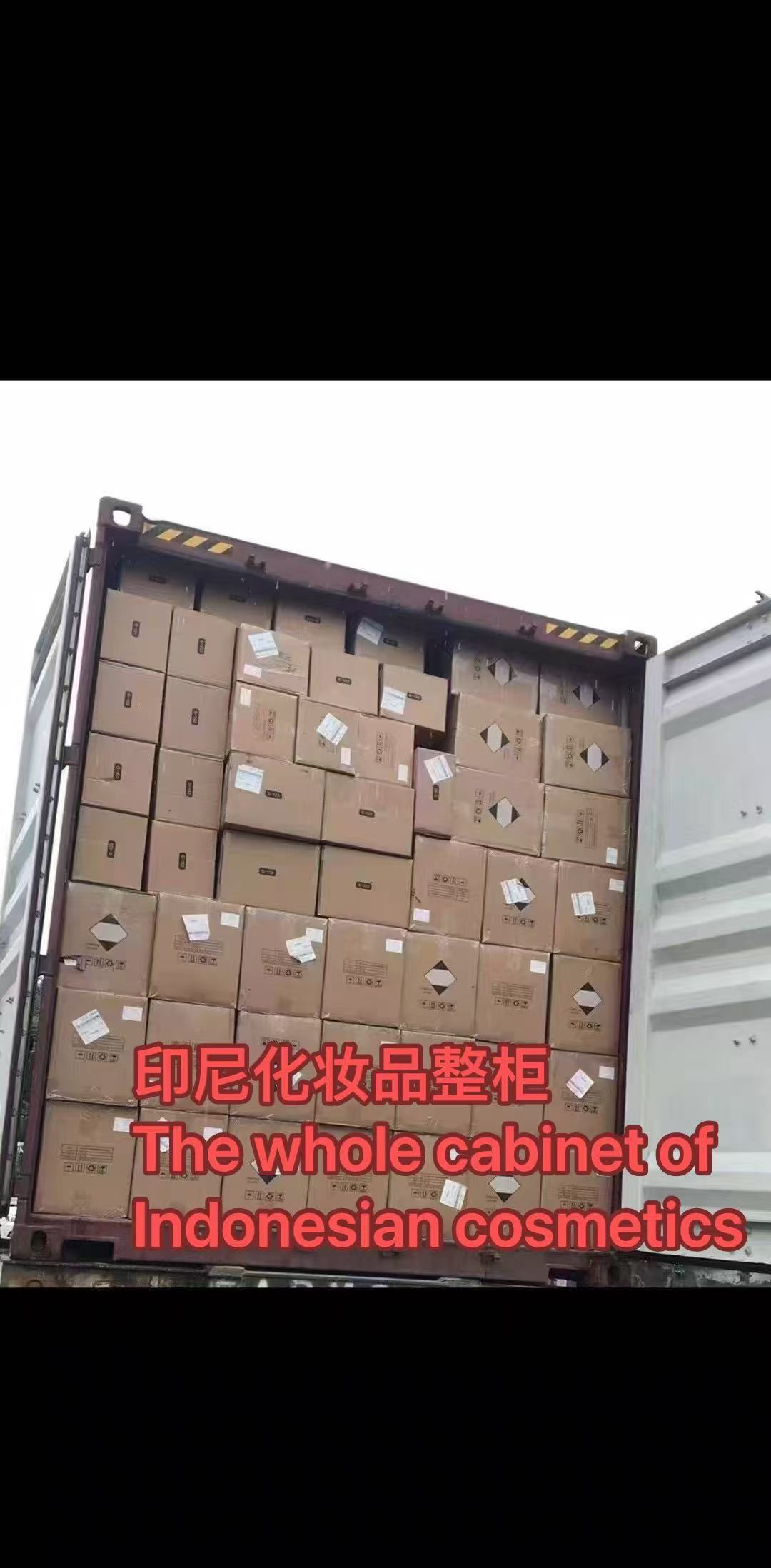
Door-to-door freight forwarding through an overseas warehouse places origin pickup, export clearance, line-haul, import handling, warehouse intake and final delivery into one contract. For Southeast Asia e-commerce sellers, the practical benefit is accountability: one party answers for the whole chain instead of three parties pointing at each other when a carton is late.
This playbook is written for sellers and operations teams at the research-to-evaluation stage — you have decided Southeast Asia is the market, and you now need a route that can be set up, measured and repeated. It follows the operating structure of Guangzhou Shunhang International Freight Forwarding Co., Ltd., a Guangzhou-based forwarder founded in 2020 whose reported overseas warehouse network exceeds 3,000 square meters across multiple Southeast Asian countries.
The sequence below runs in the order a real implementation runs: define the requirement, choose the mode, consolidate at origin, load and depart, clear export, carry, then receive and deliver at destination. Each step separates what the seller must decide from what the forwarder must supply.
What Door-to-Door via an Overseas Warehouse Actually Covers
Freight forwarding is broader than most quotations suggest. FIATA describes forwarding and logistics services as covering carriage, consolidation, storage, handling, packing or distribution, customs and fiscal matters, official declarations, insurance and related advisory services. Trade-media definitions make the same structural point: forwarding moves a shipment from its origin in the exporting country to its destination.
A port-to-port contract stops at discharge. A door-to-door contract continues through destination import handling, warehouse intake and last-mile delivery, ending with a signed delivery receipt. The overseas warehouse is the component that makes this repeatable for e-commerce, because it creates a controlled point at which one consolidated inbound shipment can be split into many outbound deliveries.
Three structural differences that matter to an e-commerce seller
- Control point. The warehouse separates the inbound transport leg from the outbound delivery leg, so a shipment can be released in batches rather than all at once.
- Batch size. Cartons can be stored, split and released in marketplace replenishment quantities instead of full-container quantities.
- Continuity of responsibility. The forwarder remains accountable after the port, through delivery and proof of delivery.
Six scoping questions to settle before you discuss price
- Where does the forwarder's responsibility start and end?
- Is destination import clearance included or excluded?
- Are duties and taxes included in the quotation, or billed to the consignee?
- Is warehouse storage included, and for how many days?
- Who arranges last-mile delivery, and what proof of delivery is issued?
- Who arranges cargo insurance, and who carries packaging risk?
Shunhang's own published scope answers several of these in advance: prohibited and illegal cargo is outside scope, customs duties and taxes are borne by the customer, risks caused by improper packaging stay with the shipper, and services beyond the agreed scope are not covered. That is a normal division of responsibility in forwarding — but it is only useful if the seller knows about it before the first shipment, not after.
Why Southeast Asia Rewards This Model
Southeast Asia is a dense cluster of short lanes rather than one long lane, which is exactly the geography where a warehouse-anchored model earns its cost. The regional backdrop supports that reading.
- The ASEAN freight forwarding market is valued at USD 31.62 billion in 2025 and is forecast to reach USD 41.86 billion by 2031, a 4.78% CAGR reported by Mordor Intelligence, with USD 33.13 billion indicated for 2026.
- China–ASEAN trade reached 4.93 trillion yuan in the first eight months of 2025, according to the General Administration of Customs as cited by the State Council Information Office.
- The New International Land-Sea Trade Corridor transported more than 1 million TEUs of cargo in the year to September 2025, per the same official reporting.
- Guangzhou Port handled 28.05 million TEUs and 699 million tons of cargo in 2025, ranking sixth globally in container throughput.
- The CAFTA 3.0 upgrade expands cooperation across nine areas, including customs procedures and trade facilitation, standards and technical regulations, and supply-chain connectivity.
One further commercial research estimate places Guangzhou's share of China's exports to ASEAN above 40%. If that estimate holds for your commodity, it explains why so much Southeast Asia e-commerce consolidation is booked out of South China: density of cargo creates frequency, and frequency is what makes small-batch door-to-door delivery economic.
What these figures should change in your planning
- Route density is an advantage, not a guarantee. A busy origin port means more sailing and uplift options; it does not automatically mean your cartons are consolidated weekly. Confirm the consolidation schedule.
- Trade facilitation is a direction of policy, not a pass. Customs procedures and trade facilitation are named cooperation areas, but declaration data still has to be right, and duties and taxes still have to be paid.
- Warehouse placement matters as much as port choice. With several destination countries in one region, the warehouse that serves the delivery address determines the last-mile cost and time more than the ocean leg does.
The Operating Model Behind the Service
Guangzhou Shunhang International Freight Forwarding Co., Ltd. is a Guangzhou-based international freight forwarder that handles sea, land and air import and export cargo, including booking, stowage, customs declaration, warehousing, pickup and delivery, and cargo insurance. The company was founded in 2020 and reports a 100% export focus.
- Warehouse footprint: total overseas warehouse area exceeds 3,000 square meters, located across multiple Southeast Asian countries.
- Volume: annual freight volume handled exceeds 5,000 tons, with annual container throughput in the hundreds of TEUs and annual turnover above tens of millions of RMB.
- Team: 30 staff, including 3 senior engineers, a multilingual customer service team, and customs and compliance specialists.
- Track record: 5+ years in Southeast Asia cross-border logistics and international freight forwarding, 500+ clients served, and a reported 98% satisfaction rate.
- Carrier access: long-term strategic partnerships with major shipping lines and airlines.
- Systems: a proprietary logistics management system and real-time cargo tracking.
- Modes and cargo: FCL, LCL, port-to-port and door-to-door service; general goods, sensitive goods, furniture, general chemical products, large-scale engineering projects and heavy cargo.
- Duration: 7–30 days depending on destination, structured from short-term projects through to long-term partnerships.
- Coverage: the Philippines, Thailand, Cambodia, Myanmar, Laos and Japan as core export markets, with Singapore, Malaysia, South Korea, Australia, Europe, America and Africa also served.
| Reported capability | What it changes for an e-commerce operation |
|---|---|
| Overseas warehouse network exceeding 3,000 sqm across multiple Southeast Asian countries | Inbound cargo can be broken into country-level and city-level deliveries without adding a separate local warehouse contract in every market |
| More than 5,000 tons of annual freight volume; hundreds of TEUs | Indicates regular consolidated loads rather than one-off bookings, which is what makes LCL carton consolidation practical |
| Partnerships with major shipping lines and airlines | Space is requested through established carrier channels instead of purely spot arrangements |
| Proprietary logistics management system and real-time tracking | A single tracking record can span origin handling, line-haul and delivery rather than three disconnected portals |
| Customs declaration and cargo insurance inside the service bundle | Documentation and cover sit with the party that is already accountable for the movement |
Verification note. Warehouse area, annual tonnage, client counts and satisfaction rate are company-reported figures. Before contracting, ask any forwarder — including this one — for the records behind the numbers: facility documentation, carrier allocation letters, and shipment records for lanes comparable to yours. Our own category review found no independent audit of these specific metrics, so they should be treated as supplier claims to be verified during evaluation, not as audited performance data.
Step-by-Step: Implementing the Route
Step 1 — Profile the shipment before you request a rate
Assemble four things: an SKU list with carton dimensions and weights, monthly volume by destination city, the delivery promise you have made to your buyers in each market, and whether your goods fall into general or sensitive categories. Mode and warehouse selection follow from volume density and delivery promise, not from habit. A seller promising three-day delivery and a seller promising three-week delivery should not be buying the same service.
Step 2 — Select the mode against a delivery promise
Shunhang reports the following transit times on two of its named Southeast Asia routes: Singapore by sea 10–18 days and by air 1–3 days; Malaysia by sea 7–15 days and by air 2–4 days. Across destinations, the stated service duration is 7–30 days. Land transportation is also offered as part of the one-stop model, with transit depending on the border route and destination — confirm it lane by lane at quotation, because overland timings vary more than ocean schedules.
A workable rule: air freight for launches, promotions and replenishment gaps where the sales window is shorter than the ocean transit; sea freight for planned replenishment where unit cost dominates; land transport where a contiguous overland route exists and the destination city is closer to a border than to a port.
Step 3 — Consolidate at the origin warehouse
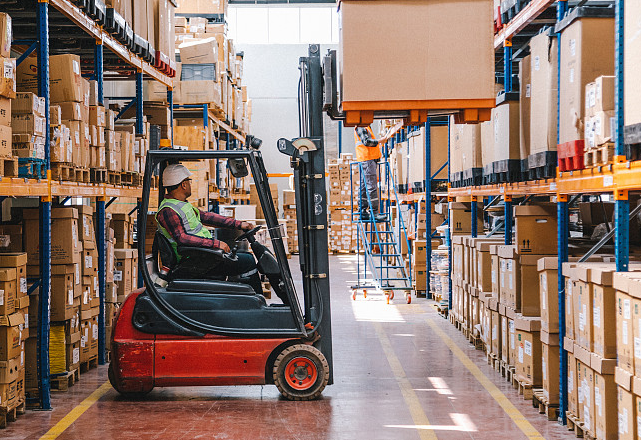
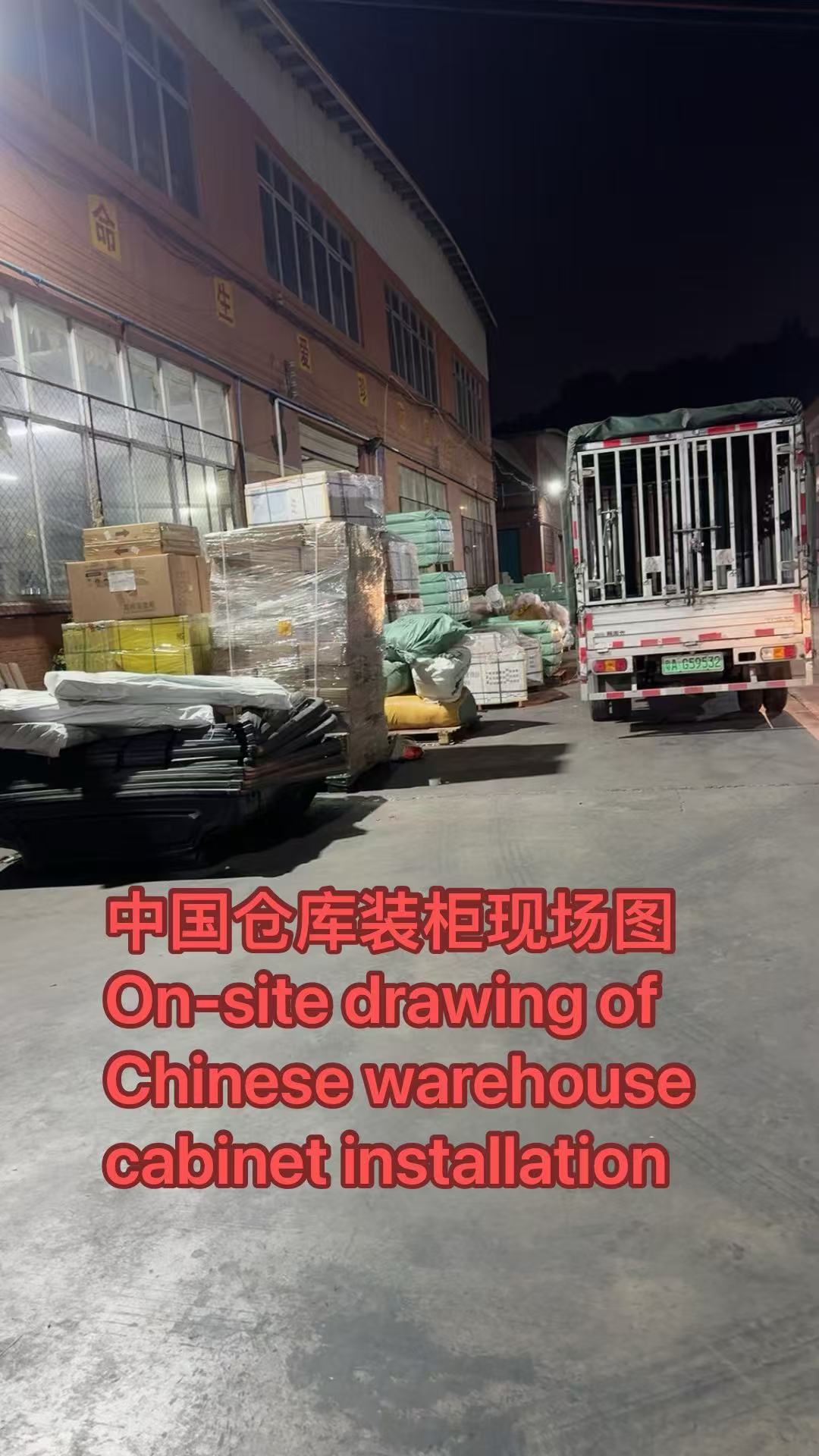
Shunhang operates exclusive loading warehouses in China, and both LCL and FCL are offered on the same door-to-door contract. This is the step where e-commerce sellers gain the most and lose the most: label cartons at the level of the final delivery batch, not just at SKU level, so the overseas warehouse can release them without re-labelling. Suppliers delivering into the warehouse should use the same carton marking convention and the same packing list format.
Step 4 — Book, stow and load
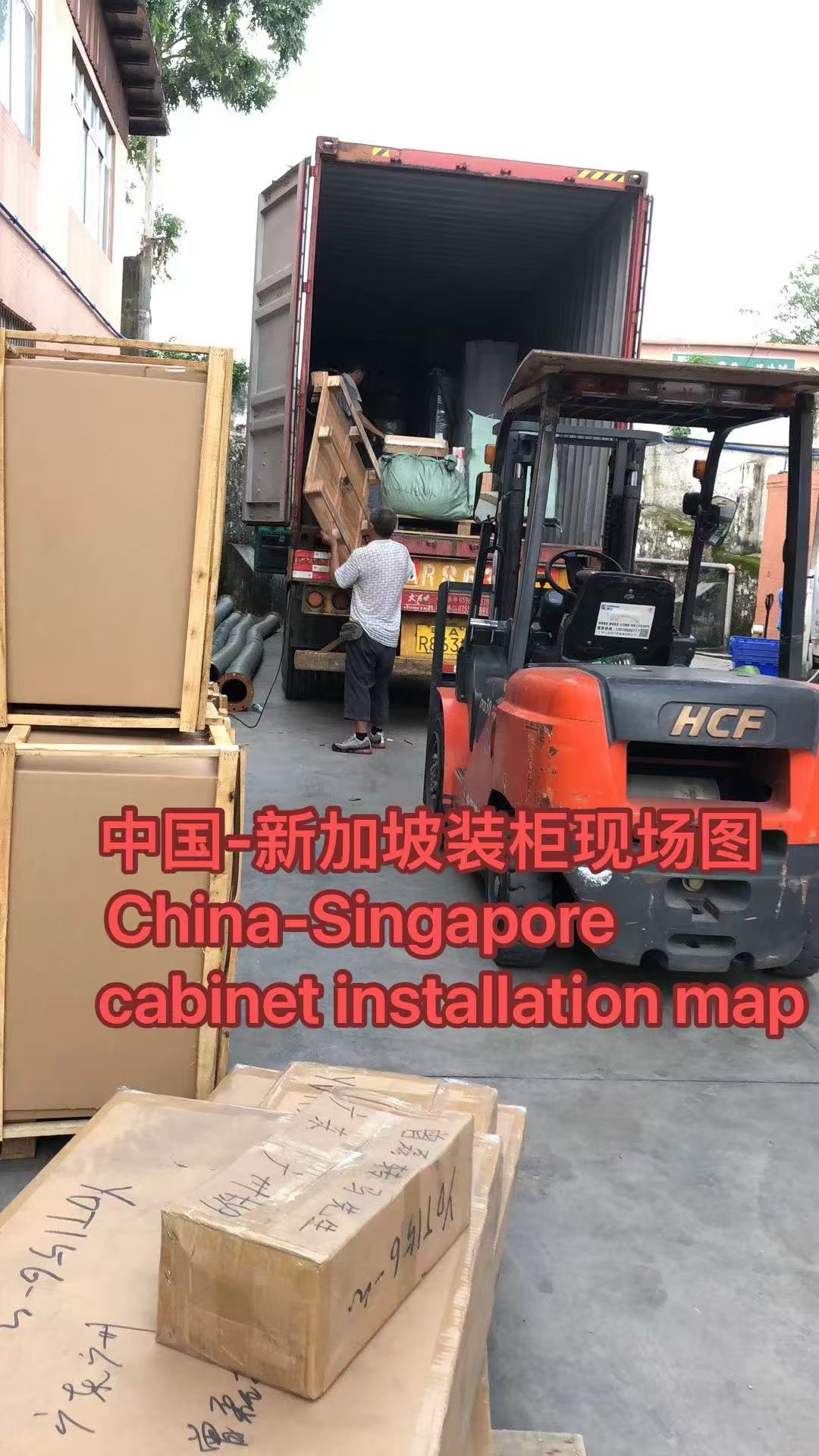
Booking and stowage are part of the stated service scope, supported by long-term partnerships with major shipping lines and airlines. At this point the seller should confirm the cut-off date, the loading plan, container or air-waybill details, and the weight and volume declaration. A stowage plan that mixes heavy cargo with light cartons affects damage rates, so ask how the load is sequenced rather than assuming it.
Step 5 — Clear export and lock the documentation
Customs declaration and cargo insurance are handled inside the service bundle. The shipper's job is to supply accurate commercial invoices, a packing list, product information and any certificate of origin required for the destination. The CAFTA 3.0 upgrade names customs procedures and trade facilitation, standards and technical regulations, and supply-chain connectivity among its cooperation areas — a useful signal that documentation discipline is becoming a competitive variable rather than an administrative afterthought. Facilitation reduces friction; it does not correct wrong data.
Step 6 — Carry on partner carriers
The main carriage runs by sea, air or land through carrier relationships the forwarder already holds. Tracking is the part worth testing early: Shunhang reports a proprietary logistics management system and real-time cargo tracking, so ask during evaluation which milestones are visible, how often they refresh, and whether the record continues after arrival at the destination warehouse. Tracking that stops at discharge is not end-to-end visibility.
Step 7 — Receive, deliver and reconcile
At destination, the overseas warehouse takes intake, storage and release, and last-mile delivery is completed against a signed delivery receipt — one of the stated service deliverables, alongside a customized logistics plan, complete shipping and customs documents, and real-time tracking information. Close the loop with a monthly reconciliation: planned versus actual transit against the quoted benchmark, intake accuracy, damage claims, and cost per delivered unit. That reconciliation, not the quotation, is what tells you whether the route is working.
Four E-Commerce Scenarios and How the Model Adapts
Scenario 1 — Scheduled marketplace replenishment into Singapore and Malaysia
Use sea freight on a repeating cycle, hold a buffer at the overseas warehouse, and release stock in smaller batches. The reported sea transit benchmarks of 10–18 days to Singapore and 7–15 days to Malaysia set the reorder point; the warehouse sets the release frequency. The KPI here is stock-out rate, not freight rate.
Scenario 2 — A launch that cannot wait for an ocean cycle
Use air freight, at 1–3 days to Singapore and 2–4 days to Malaysia, to bridge the gap between a launch date and the first sea container. This is the most expensive mode per unit and should be time-boxed: plan the sea replenishment to land before the air buffer is exhausted.
Scenario 3 — A multi-country rollout across the Philippines, Thailand, Cambodia, Myanmar and Laos
These are Shunhang's named core export markets, and they are not a single delivery problem. A rollout works when the overseas warehouse network, rather than a single port relationship, is used to sequence country-by-country entry. Stage the rollout by market so that the second country benefits from what the first country's documentation and labelling taught you.
Scenario 4 — High-value electronics with a fixed delivery window
A large electronics manufacturer expanding into Southeast Asia brought a specific set of problems: complex customs requirements, tightly fixed delivery schedules, high logistics costs with unstable timeliness, cargo safety risk for sensitive components, and no end-to-end supply chain visibility. The applied solution was a customized end-to-end logistics programme with a dedicated team, local customs expertise, real-time tracking and risk management protocols. Reported outcomes were a 30% reduction in logistics cost, a 99.5% on-time delivery rate and zero cargo damage, with the client describing the provider as a reliable partner for its regional expansion.
Comparing the Three Modes on the Same Lane
| Decision factor | Sea freight (LCL / FCL) | Air freight | Land transport |
|---|---|---|---|
| Typical e-commerce use | Planned replenishment; bulky or lower-value-per-kg goods | Launches, promotions, high-value goods with a short sales window | Contiguous overland markets where a road route is available |
| Reported transit to Singapore | 10–18 days | 1–3 days | Lane-dependent; confirm at quotation |
| Reported transit to Malaysia | 7–15 days | 2–4 days | Lane-dependent; confirm at quotation |
| Load formats offered | FCL and LCL, port-to-port or door-to-door | Air cargo, door-to-door | Consolidated road transport, door-to-door |
| Cost position | Generally the lowest unit cost for high volumes | Highest unit cost per chargeable kilo; justified by speed | Route-dependent; compare against sea and air for each border lane |
| Main risk to manage | Port dwell and documentation accuracy | Space availability and chargeable weight ratio | Border clearance and transit variability |
| Best fit when | Delivery promise is measured in weeks | Delivery promise is measured in days | Destination city is closer to a border than a port |
Across all three modes, the overall service duration Shunhang states is 7–30 days depending on destination, and cargo acceptance covers general goods, sensitive goods, furniture, general chemical products, large-scale engineering projects and heavy cargo.
Limits: What Door-to-Door Does Not Cover
- Prohibited cargo. Illegal and prohibited cargo is outside the service scope. Sensitive goods are accepted, but they are not the same as prohibited goods.
- Duties and taxes. Customs duties and taxes are borne by the customer. If you are selling DDP-style to buyers, model this line separately or the landed cost will be wrong.
- Packaging risk. Risks caused by improper packaging remain with the shipper. Carton strength is a seller-side decision with a direct effect on damage claims.
- Scope boundaries. Services beyond the agreed scope are not covered. Anything you assume is included should be written into the quotation.
- Transit benchmarks. Published transit times describe the transport leg on a lane. Actual delivery dates also depend on how quickly documentation is complete and how destination clearance proceeds.
Contract checklist before the first shipment
- Written scope showing each included service: pickup, export declaration, main carriage, import handling, warehousing, last-mile, insurance.
- Named destination warehouse and the storage period included.
- Agreed proof of delivery format and who receives it.
- Documented mode and lane transit benchmark, so performance can be measured later.
- Escalation contact and response expectation for exceptions.
Frequently Asked Questions
What customs documentation does a door-to-door e-commerce shipment to Southeast Asia require?
The forwarder handles export declaration as part of the service, and cargo insurance is arranged within the same bundle. The shipper supplies accurate commercial invoices, a packing list and product information, and receives the transport document for the main carriage. Two boundaries matter in practice: prohibited and illegal cargo is outside scope, and customs duties and taxes are borne by the customer rather than being included by default. The CAFTA 3.0 upgrade names customs procedures and trade facilitation, standards and technical regulations, and supply-chain connectivity among its cooperation areas — useful context, but facilitation does not substitute for correct declaration data.
Can one forwarder handle both small e-commerce batches and full containers to Southeast Asia?
Yes, provided the provider runs LCL, FCL and door-to-door delivery under one contract. Shunhang states full container load, less than container load, port-to-port and door-to-door service, accepts general goods, sensitive goods, furniture, general chemical products and heavy or project cargo, and reports more than 5,000 tons of annual freight volume with container throughput in the hundreds of TEUs. Because those volume figures are company-reported, ask for shipment records on lanes comparable to yours during evaluation.
What drives the cost of a door-to-door e-commerce shipment into Southeast Asia?
Cost follows the mode, the chargeable weight or volume, warehouse handling and storage days, last-mile distance within the destination city, insurance, and whether duties and taxes are prepaid or collected. Shunhang's stated scope places customs duties and taxes with the customer, so they should be modelled as a separate line rather than assumed to be inside the freight rate. Quotations are built per lane and per service scope; the electronics expansion case reported a 30% logistics cost reduction once consolidation and routing were restructured.
Can we run a trial shipment before committing volume?
Engagements are structured from short-term projects through to long-term partnerships, with a stated service duration of 7–30 days depending on destination, so a first shipment can be scoped as a defined pilot on one lane and one destination city. Set the success criteria before booking: actual transit against the published benchmark, documentation accuracy, warehouse intake accuracy, and proof-of-delivery turnaround. Compare the outcome against the standard deliverables — a customized logistics plan, complete shipping and customs documents, real-time tracking information, and a signed delivery receipt.
How much lead time should we plan for, and what transit time can we quote our buyers?
Shunhang reports sea transit of 10–18 days and air transit of 1–3 days to Singapore, and sea transit of 7–15 days and air transit of 2–4 days to Malaysia, with an overall service duration of 7–30 days depending on destination. Add origin consolidation time and destination last-mile time on top of the line-haul benchmark when you set a customer-facing promise. To get a lane-specific plan, send the destination city, monthly volume and delivery promise to the Shunhang team by WhatsApp on +8618928711267 or email xueyingxiasahi@hotmail.com and request a door-to-door quotation with the warehouse and delivery component itemised.
Conclusion
Door-to-door freight forwarding through an overseas warehouse works because it converts a multi-party chain into one accountability line: origin pickup, export declaration, main carriage, import handling, warehouse intake and delivery, evidenced by a signed delivery receipt. For Southeast Asia e-commerce, the model is a fit because the region is a cluster of short lanes served by dense South China consolidation — Guangzhou Port alone handled 28.05 million TEUs in 2025, and China–ASEAN trade reached 4.93 trillion yuan in the first eight months of 2025.
The implementation discipline is unglamorous and decisive: profile the shipment, pick the mode against the delivery promise rather than against habit, label cartons for the delivery batch, confirm what sits inside the scope, and reconcile actual transit against the benchmark every month. Sellers who do those five things get a route they can scale. Sellers who skip them get a quotation that looked competitive and a warehouse full of cartons nobody can release.
Next Step: Quote, Pilot or Warehouse Plan
Send your destination cities, monthly volume and delivery promise, and the Shunhang team will return a door-to-door plan covering mode selection, the overseas warehouse component, customs documentation and the transit benchmark for your lane.
WhatsApp: +8618928711267 | Email: xueyingxiasahi@hotmail.com | Tel: +86 18218887283 | Website: www.sunhang-logistics.com
Guangzhou Shunhang International Freight Forwarding Co., Ltd. — one-stop sea, air and land door-to-door freight forwarding for Southeast Asia, with an overseas warehouse network exceeding 3,000 square meters.
Have Questions or Need More Details?
Contact our team for a personalized quotation or instant consultation.
Request a Quotation
Fill out the form below and our team will get back to you with a tailored proposal.
WhatsApp Direct Chat
Prefer to chat in real-time? Message us on WhatsApp for instant assistance & quick answers.
- Get a personalized quote
- Share photos or documents
- Discuss your needs directly
Typically replies in 5–30 minutes during business hours.