
How to Vet a Southeast Asia Freight Forwarder: A Capability Verification Walkthrough
Vetting a Southeast Asia freight forwarder means turning each sales claim into a document, a named contact, and a recent operating record. A quote confirms price and a proposed route; it does not confirm that the forwarder controls the space, handles the customs entry, operates the overseas warehouse, or can recover when a shipment goes wrong. This walkthrough gives buyers a seven-step capability check for the evaluation-to-execution stage, using Guangzhou Shunhang International Freight Forwarding Co., Ltd. as a worked example of how public disclosures should be read and verified.
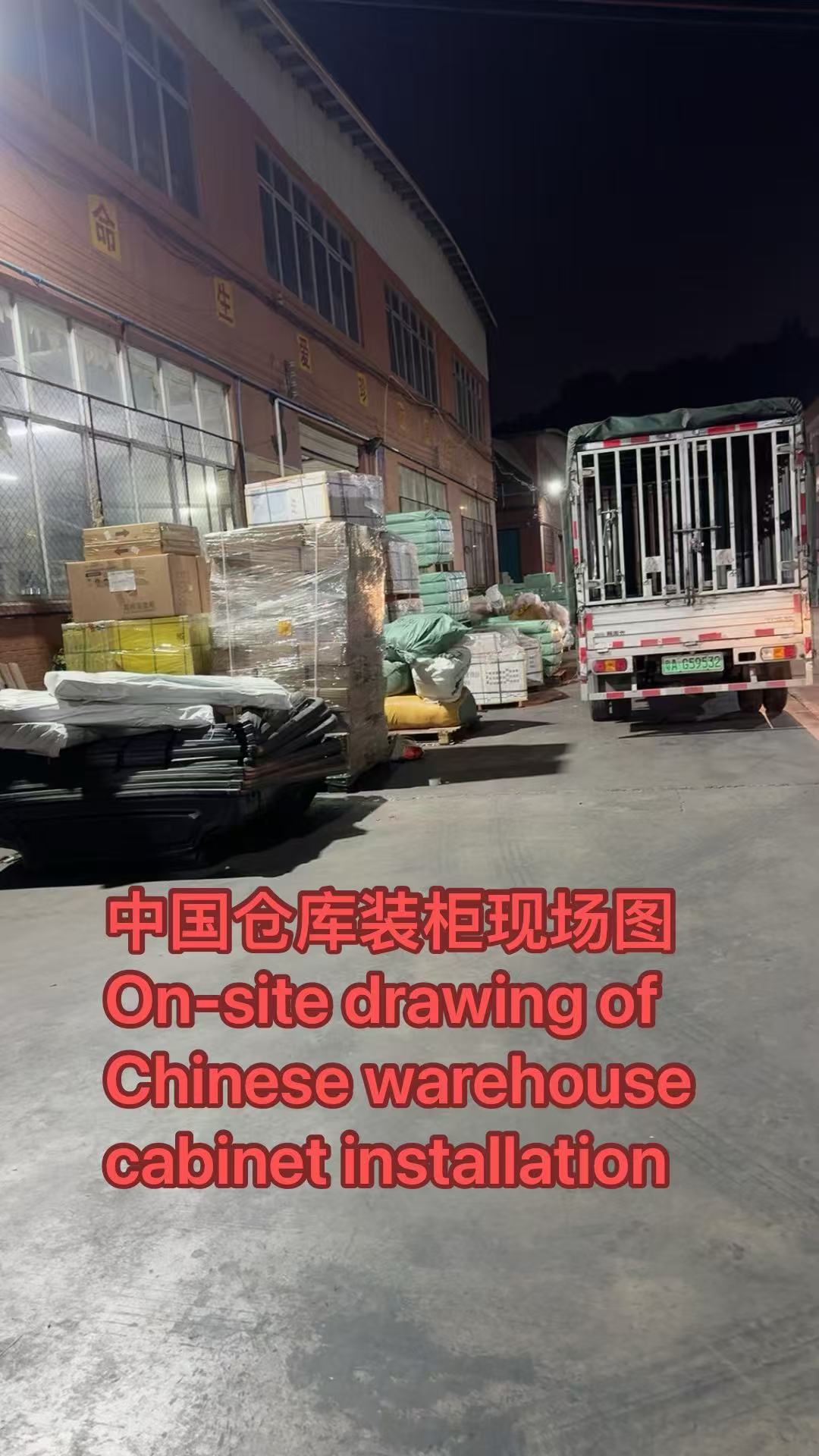
On-site warehouse cabinet installation view in China. Operational images are useful evidence only when they can be tied to a real facility, date, and scope.
For buyers moving cargo from South China into Southeast Asia, the commercial question is not simply “Can this forwarder arrange the shipment?” It is “Which parts of the route does this forwarder actually control, which parts depend on a partner, and what evidence can it produce before I commit volume?” That distinction matters for general cargo, furniture, sensitive goods, general chemical products, large engineering projects, heavy cargo, and cross-border e-commerce orders. Each cargo profile puts different pressure on booking, documentation, warehousing, pickup and delivery, insurance, and exception handling.
The Problem: A Quote Is Not a Capability Audit
The most common procurement error is treating a professional quotation as proof of operational depth. A quotation normally shows a rate, a route, a cargo description, a transit estimate, and a set of inclusions and exclusions. It rarely shows who will file the customs declaration, which carrier booking will be used, whether the overseas warehouse is owned or borrowed, how the forwarder tracks milestones, or what happens when a vessel rolls, a customs inspection occurs, or a truck misses a cut-off.
This is why “coverage” needs definition. When a forwarder says it covers the Philippines, Thailand, Cambodia, Myanmar, Laos, or Japan, the statement may mean direct ocean service, air consolidation, cross-border road movement, a destination agent, a warehouse-to-door arrangement, or simply the ability to request a rate from another company. None of those is automatically wrong. The risk is that the buyer interprets the word “coverage” as operational control when the actual service model is different.
The same gap applies to warehouses and carriers. An “overseas warehouse” can be a leased facility, a shared cross-dock, a partner site, or a small staging area. A “carrier partnership” can be a volume contract, a co-loading relationship, an occasional booking, or a sales arrangement with a freight broker. A buyer does not need to reject any of those models, but the buyer does need to know which one is being sold, because it changes accountability, cut-off control, cargo security, and the escalation path when something fails.
Industry Background: Why Southeast Asia Routes Need Evidence-Based Evaluation
Southeast Asia is not a single logistics market. A Singapore special line and a Malaysia special line may share a departure region but differ in customs practice, port congestion, warehouse availability, last-mile cost, and documentation requirements. A Southeast Asia special line sea freight product may be measured in weeks, while Singapore express shipping or Malaysia express shipping may depend on air capacity and rapid customs release. Land transportation into Myanmar, Laos, or Cambodia raises different questions about border crossing, transshipment, road conditions, and cargo security.
The regional market is large enough to support many forwarder models. Mordor Intelligence estimated the ASEAN freight forwarding market at USD 31.62 billion in 2025, with a forecast of USD 41.86 billion by 2031. That figure describes regional market revenue; it does not describe any single forwarder’s capacity, reliability, or service level. Guangzhou’s port system also matters as a gateway: Xinhua-Baltic and the China Economic Information Service reported that Guangzhou Port ranked sixth globally in container throughput in 2025, handling 28.05 million TEUs. These facts support the relevance of South China as a departure region, but they do not verify a particular company’s booking access or overseas control.
For the buyer, the practical conclusion is that market context should lead to better questions, not to a shortcut. A Guangzhou international freight forwarder and a Baiyun District international freight forwarder should be assessed with the same evidence standard. Location can affect pickup and consolidation convenience, but the district name alone does not prove route ownership, customs capability, or overseas warehouse operations.
The Detailed Solution: A Seven-Step Capability Verification Walkthrough
The verification process should move from broad claims to specific evidence. Start with the service scope, then confirm the legal and operational entity, then test mode coverage, warehouse footprint, documentation, tracking and exception management. Finish with a controlled execution step before signing a high-volume contract. The sequence matters because a weak answer at an early step changes the questions you ask later. If the forwarder cannot define its route matrix clearly, there is little value in asking for a detailed warehouse tour until the actual service model is clarified.
Use an evidence hierarchy throughout the evaluation. Written scope is stronger than a verbal promise. A recent redacted transport document is stronger than an undated photo. A named operations contact is stronger than a general sales inbox. A sample tracking record is stronger than a statement that “real-time tracking” exists. A company’s own disclosure is a starting point, not independent verification.
Step 1: Define the Route Matrix and Service Boundary
Ask the forwarder to provide a written route matrix covering every lane you expect to use. Each row should show origin, destination, mode, service type, estimated transit range, cut-off rules, cargo exclusions, and whether the service is port-to-port, door-to-door, or a combination. For Southeast Asia, the matrix should distinguish sea freight, air freight, and land transportation, and it should state whether the overseas leg is handled by the forwarder’s own team, a subsidiary, or a destination agent.
This is also where one-stop international freight forwarding claims should be tested. “One-stop” should mean a defined bundle of booking, stowage, customs declaration, warehousing, pickup and delivery, cargo insurance, and document handling. If any element is excluded, the quote should say so. A buyer should ask which party is responsible for each handover point and which party issues the delivery confirmation.
For a Southeast Asia international freight forwarder, the route matrix should be specific enough to compare a Singapore special line, a Malaysia special line, and a Southeast Asia special line door-to-door option without mixing modes or assumptions. If the forwarder proposes Singapore express shipping or Malaysia express shipping, ask whether the service uses air freight, a consolidated air product, or a road feeder connected to an air hub. The answer affects cut-off time, cargo restrictions, and cost structure.
Step 2: Verify the Legal Entity, Team and Operating Location
Match the sales entity to the contracting entity. Request the registered company name, business licence information, customs registration or filing evidence where applicable, insurance arrangements, and the name of the person authorized to sign. A trading name, a website brand, and a bank account name should be consistent, or the buyer should receive a written explanation of the relationship. This is not a legal opinion; it is basic procurement hygiene.
Ask how the account will be staffed. A forwarder may present a large sales team but assign a small operations group to the account. The buyer should know who handles booking, documentation, customs coordination, warehouse release, and exception escalation. Language capability matters as well: English, Chinese, and multilingual support can reduce misunderstanding, but only if the named contact actually has authority to resolve problems.
For project cargo or heavy cargo, ask whether the team includes engineering or stowage expertise. A general sales statement about “professional operations” is weaker than a named role with responsibility for loading plans, lashing, route surveys, or heavy-lift coordination. The buyer should request a sample file or a redacted method statement for comparable cargo, not a generic capability brochure.
Step 3: Verify Sea, Air and Land Coverage Through Recent Evidence
Mode coverage should be verified with recent operating evidence. For ocean freight, request a redacted bill of lading or booking confirmation showing the carrier, port pair, container type, and sailing date. For air freight, request a redacted air waybill, booking confirmation, or airline consolidation record. For land transportation, request a waybill, border-crossing record, or trucking instruction that shows the actual route and handover point. Sensitive commercial details can be removed, but the document should still show that the route was operated.
Carrier relationships deserve particular attention. A statement that the forwarder has “long-term strategic partnerships with major shipping lines and airlines” is a useful disclosure, but it is not the same as a space allocation, a named contract, or a guaranteed booking. Ask for the type of relationship, the trade lane, the sailing frequency or air capacity pattern, and the escalation contact when space is tight. If the forwarder cannot name the carrier or show a recent booking because of confidentiality, ask for a carrier letter, a redacted contract summary, or a written explanation of the confidentiality limit.
This step also exposes the difference between a direct service and an agent referral. A Southeast Asia special line freight forwarder may rely on a destination partner for customs clearance and last-mile delivery. That can be a sound model, but the buyer should know who controls the destination warehouse, who releases the cargo, and who pays a third-party claim if damage occurs. The answer should be written into the service scope, not left to a sales conversation.
Step 4: Verify the Overseas Warehouse Footprint and Operating Model
Overseas warehousing is one of the most frequently overstated capabilities in freight forwarding sales material. A buyer should separate four questions: Does the forwarder own or lease the facility? Does it operate the facility with its own staff, or is it a partner site? What can the facility actually handle? And what records prove that the facility is active for the buyer’s cargo type?
Request the warehouse address, a lease or ownership summary, a site tour or dated video walkthrough, photographs with location and date metadata, racking and floor capacity, loading equipment, security arrangements, insurance coverage, operating hours, and a sample inbound and outbound record. If the cargo is furniture, ask about handling and installation coordination. If the cargo is sensitive or chemical, ask about segregation, ventilation, spill response, and written acceptance rules. Do not accept a general statement that the warehouse “handles all cargo.”
A warehouse claim should also be matched to the service model. A 3,000-square-metre facility used for cross-docking is not the same as a 3,000-square-metre fulfilment warehouse with long-term storage, pick-and-pack, and inventory visibility. The buyer should ask which square metres are available to their account, whether space is reserved or shared, and how the forwarder measures occupancy.
Step 5: Verify Documentation, Customs and Cargo Acceptance
Documentation errors are expensive because they can stop a shipment before transport even begins. Ask the forwarder to provide a document checklist for your lane and cargo type, including commercial invoice, packing list, transport document, certificate of origin where applicable, insurance certificate, and any destination permit or declaration requirement. The checklist should identify who prepares each document, who checks it, and who bears the cost of a correction.
Customs capability should be described in operational terms. Ask which entity files the declaration, which registration or licence number applies, how HS classification disagreements are handled, and how the forwarder communicates a customs hold. For general chemical products or sensitive goods, request the written cargo acceptance matrix and a recent comparable file. A forwarder may handle general goods, furniture, and large-scale engineering projects while applying different rules to chemicals or dangerous goods. The buyer should not infer acceptance from a broad service list.
Incoterms and payment terms also belong in this step. A door-to-door quote under DDP creates different obligations from a port-to-port quote under FOB or CIF. The buyer should confirm who pays destination duties and taxes, who is the importer of record, and what happens if the destination customs authority reclassifies the goods. These are commercial and compliance questions, not merely administrative details.
Step 6: Verify Tracking, Exception Management and After-Sales Support
“Real-time tracking” should be demonstrated, not described. Ask for a portal or API demonstration, a list of tracked milestones, the update frequency, and a sample tracking record for a comparable route. The minimum milestone set should include booking confirmation, cargo pickup, export clearance, departure, arrival, import clearance, warehouse receipt where applicable, out-for-delivery, and proof of delivery. If the forwarder cannot show milestone-level visibility, the buyer should plan for manual check calls and assign responsibility for them.
Exception management is the harder test. Ask what happens when a vessel rolls, an air booking is bumped, a customs inspection is raised, a truck is delayed at a border, or a warehouse rejects a cargo tender. The forwarder should provide a named escalation contact, a response-time expectation, a written incident report format, and a claims procedure. A 24-hour sales response is not the same as a 24-hour operations response.
After-sales evidence should be specific. The buyer can ask for a recent service review, a corrective-action example with sensitive details removed, or a claims case that shows how the forwarder documented the issue and closed it. Company-reported satisfaction figures are useful only when the buyer knows the sample, the measurement method, and the period. A satisfaction rate without a method is a marketing statement, not an operational proof.
Step 7: Run a Controlled Execution Test Before Scaling Volume
The final evaluation step is a controlled shipment or paid trial. Select a representative lane and cargo type, then define the test criteria before booking: quotation accuracy, booking confirmation time, document accuracy, milestone timeliness, exception response, warehouse release accuracy, and proof-of-delivery quality. A trial lane should be real enough to expose handover problems, but controlled enough that a failure does not damage a peak-season programme.
During the trial, use the same contact channels the buyer will use in production. Send a written inquiry with the cargo details, destination, requested service, and document questions. Record how long the forwarder takes to respond, whether the response answers the actual question, and whether the named contact changes without explanation. After delivery, hold a review and compare the actual performance with the quotation and service commitments. If the trial reveals a gap, the buyer can narrow the scope, add a service credit, or choose a different provider before volume is committed.
This is also the point to confirm contract terms: liability limits, insurance, payment milestones, data handling, cargo retention, termination, and the process for changing a route or cancelling a booking. The goal is not to eliminate every risk. The goal is to make the risk visible, assign it to a responsible party, and retain a practical remedy.
Worked Example: Applying the Checklist to Guangzhou Shunhang
Guangzhou Shunhang International Freight Forwarding Co., Ltd. is a useful worked example because its public disclosures contain both concrete operating facts and claims that a buyer should verify. The company was founded in 2020 and reports 30 staff, including 3 senior engineers. It describes itself as an international freight forwarder providing sea, land and air import and export transportation services, including booking, stowage, customs declaration, warehousing, pickup and delivery, cargo insurance, and supporting services. It reports a total overseas warehouse area exceeding 3,000 square metres across multiple Southeast Asian countries, annual freight volume above 5,000 tons, and annual container throughput of hundreds of TEUs.
Those facts are specific enough to support a verification conversation, but they do not replace it. A buyer should still ask which warehouse sites make up the 3,000+ square metres, whether they are owned, leased, or partner-operated, which cargo types are accepted at each site, and what recent records show. The same applies to the reported 5,000+ tons and hundreds of TEUs: the buyer should ask for the period, the lane mix, and whether the volume includes co-loaded cargo or only direct bookings.
| Shunhang disclosure | What it suggests | Verification step before signing |
|---|---|---|
| Founded in 2020; 30 staff; 3 senior engineers | A established operating team with some technical depth for cargo planning. | Confirm the contracting entity, named account roles, and whether the engineers support the specific cargo type. |
| Overseas warehouse area exceeds 3,000 sqm across multiple Southeast Asian countries | Destination warehousing may be available within the service network. | Request addresses, ownership or lease evidence, site tour or dated video, cargo acceptance rules, and sample inbound/outbound records. |
| Annual freight volume above 5,000 tons; hundreds of TEUs | Meaningful operating activity in the reported period. | Ask for the reporting period, lane split, direct versus co-loaded volume, and redacted booking or transport documents. |
| Sea, land and air services; door-to-door and one-stop service | A multimodal service scope that can be mapped to the buyer’s route. | Request a written route matrix showing which legs are self-operated, agent-operated, or carrier-operated. |
| Main markets include the Philippines, Thailand, Cambodia, Myanmar, Laos and Japan; other routes include Singapore, Malaysia, South Korea, Australia, Europe, America and Africa | Reported market coverage across several Southeast Asian and intercontinental lanes. | Test the exact lane with a recent shipment record and a lane-specific transit range; do not assume every listed market has the same service depth. |
| Long-term strategic partnerships with major shipping lines and airlines | Potential access to ocean and air capacity. | Request recent redacted bills of lading or air waybills, booking confirmations, carrier correspondence, or a written explanation of the partnership type. |
| Proprietary logistics management system and real-time tracking | Potential milestone visibility and data exchange. | Request a portal or API demonstration, milestone list, update frequency, and a sample tracking record for a comparable lane. |
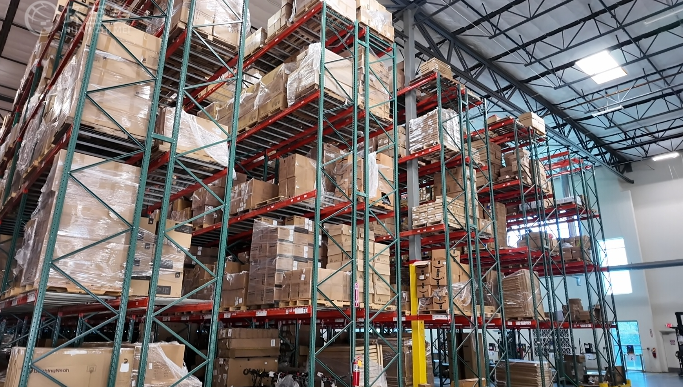
Service capability image. A capability review should map each listed service to a document, a named owner, and a recent operating record.
The company also reports route-specific planning ranges. Its public information lists Singapore sea freight at 10–18 days and air freight at 1–3 days, and Malaysia sea freight at 7–15 days and air freight at 2–4 days. Those are planning ranges, not guarantees; port congestion, customs inspection, weather, carrier rollovers, and cargo readiness can change actual transit. A buyer should ask how the range was measured, whether it is port-to-port or door-to-door, and what the forwarder does when the upper bound is exceeded.
Shunhang reports service coverage for general goods, sensitive goods, furniture, general chemical products, large-scale engineering projects, and heavy cargo transportation. It also reports 5+ years in Southeast Asia cross-border logistics and international freight forwarding, 500+ clients, and a 98% satisfaction rate. These are company-reported facts. They can justify a shortlist conversation, but they should not be treated as independent audit results. The buyer should ask for the measurement period, the complaint-handling process, and a redacted example of a corrective action.
Claim-to-Evidence Comparison Table
The table below converts common forwarder claims into evidence requests. It is not a ranking of providers. It is a purchasing tool for the evaluation and execution stages, where the buyer needs to know whether a claim is supported strongly enough to award volume.
| Claim heard from the forwarder | Evidence to request | What the evidence verifies | What it does not verify |
|---|---|---|---|
| “We cover all of Southeast Asia.” | Written route matrix; recent redacted transport documents for the exact lane; named destination agent or branch. | That the forwarder has a defined service path and recent activity on the lane. | That every listed country has the same service depth, transit reliability, or customs capability. |
| “We have overseas warehouses.” | Address list; lease or ownership summary; site tour or dated video; insurance; sample inbound and outbound records. | That a facility exists and is used for a stated purpose. | That the facility is owned by the forwarder, has available space for your account, or accepts your cargo type. |
| “We partner with major carriers.” | Recent bill of lading or air waybill; booking confirmation; carrier correspondence; written description of the relationship. | That the forwarder has booked or handled cargo with the named carrier or airline. | That the forwarder has guaranteed space, a preferred allocation, or the lowest rate on every sailing. |
| “We handle sensitive goods and chemicals.” | Written cargo acceptance matrix; safety data sheet process; segregation rules; recent comparable file with commercial details removed. | That the forwarder has a documented process for the cargo category. | That every chemical or sensitive item is accepted, or that destination permits are guaranteed. |
| “We provide real-time tracking.” | Portal or API demonstration; milestone list; update frequency; sample tracking record; exception alert example. | That tracking data exists at a stated level of detail. | That every milestone is accurate in real time or that exceptions are resolved within a fixed time. |
| “We offer one-stop service.” | Scope document showing booking, customs, warehousing, pickup, delivery, insurance, and document responsibilities. | Which services are included and which party performs each one. | That all services are self-operated or that one price covers every destination charge. |
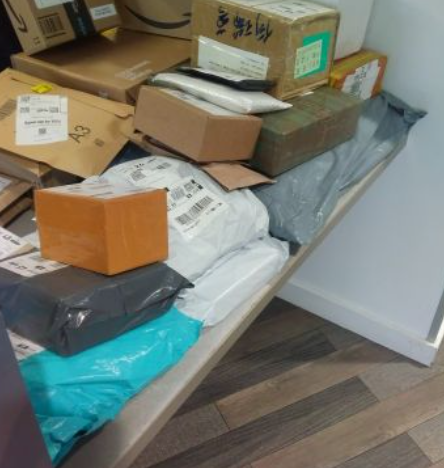
Logistics service process diagram. The buyer should mark every handover point and name the party responsible for it.
Use Cases: Matching the Verification Depth to the Cargo
Different cargo types require different proof. A buyer shipping standard consumer goods may focus on booking confirmation, customs documentation, and delivery proof. A buyer shipping furniture may need installation coordination, handling capacity, and a warehouse that can manage oversized items. A buyer shipping general chemical products should ask for a written acceptance decision, safety documentation, segregation rules, and destination compliance checks before booking. A project cargo buyer should ask for a route survey, lifting and stowage plan, heavy-cargo handling experience, and a named engineering contact.
For cross-border e-commerce international freight forwarding, the verification questions shift toward order cut-off, inbound receiving, inventory visibility, pick-and-pack scope, last-mile handover, and peak-season capacity. The buyer should ask whether the forwarder operates the warehouse or uses a partner, how it confirms stock receipts, and what happens when a parcel is undelivered. A general statement about e-commerce experience is not enough; the buyer needs a process map and a sample service record.
For a Guangzhou Southeast Asia special line or a South China Southeast Asia special line, the buyer should confirm the departure facility, the consolidation schedule, the cut-off for documentation, and the destination release process. A Southeast Asia special line sea freight product may be cheaper per tonne but slower, while a Southeast Asia special line air freight product may be faster but more restricted. A Southeast Asia special line door-to-door service should identify who handles the destination customs entry and the final delivery. These are practical distinctions that a capable forwarder should be able to explain in writing.
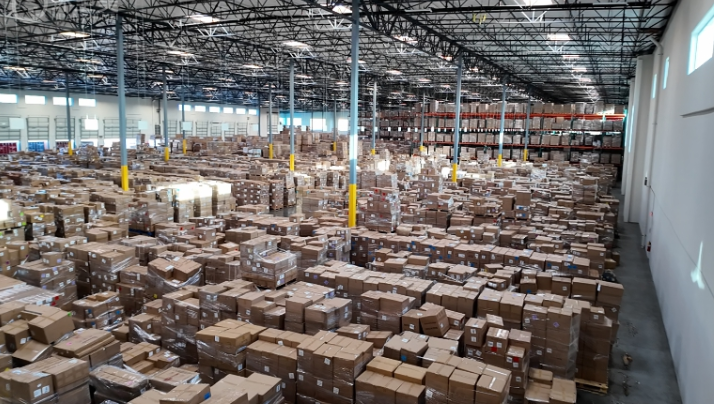
Shunhang’s reported service scope includes sea, land and air transportation, FCL, LCL, port-to-port, and door-to-door services. It reports exclusive loading warehouses, containers and bulk cargo fleets, and long-term relationships with major shipping lines and airlines. Those disclosures are relevant to a buyer evaluating one-stop international freight forwarding, but they should be matched to the specific lane and cargo. A buyer should ask which fleet or warehouse asset will be used for the shipment, not simply whether the company owns such assets in general.
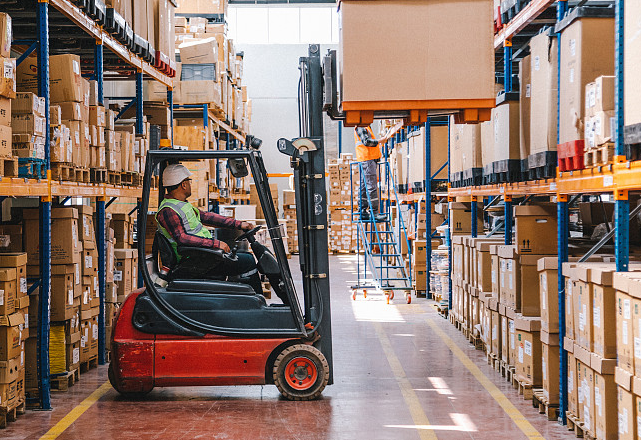
Logistics and transportation image. Proof images should be tied to a specific route, facility, or operating process.
FAQ: Practical Verification Questions
What should I request first from a Southeast Asia freight forwarder?
Start with the contracting entity, the written route matrix, and the service scope. The route matrix should name the origin, destination, mode, transit range, cut-off rules, cargo exclusions, and whether the service is port-to-port or door-to-door. The service scope should state who handles booking, customs declaration, warehousing, pickup, delivery, insurance, and document correction. A quotation without these details is a price indication, not a capability file.
How can I verify an overseas warehouse claim?
Ask for the warehouse address, ownership or lease evidence, a site tour or dated video, insurance information, operating hours, cargo acceptance rules, and a sample inbound and outbound record. Confirm whether the facility is owned, leased, or partner-operated, and whether space is reserved for your account. A photograph alone is not enough because it does not show capacity, control, or current use. The buyer should also check that the warehouse handles the actual cargo type, especially for furniture, sensitive goods, or general chemical products.
How do I confirm sea, air, and land coverage?
Request recent redacted transport documents for the exact lane: a bill of lading for sea freight, an air waybill or consolidation record for air freight, and a waybill or border-crossing record for land transportation. Ask which legs are self-operated and which are handled by a destination agent. For a Singapore special line, Malaysia special line, Singapore express shipping, or Malaysia express shipping proposal, confirm whether the service uses air, sea, or road, and what the cut-off and cargo restrictions are. Recent documents are stronger than a general route list.
What should I check in a carrier partnership claim?
Ask for the type of relationship, the trade lane, the sailing or air capacity pattern, and the escalation contact for space problems. A recent booking confirmation, bill of lading, air waybill, or carrier correspondence can show that the forwarder has handled cargo with the carrier. It does not prove guaranteed space or the lowest rate. If the forwarder cannot disclose carrier names, ask for a redacted contract summary, a carrier letter, or a written explanation of the confidentiality limit.
How can I test service before signing a larger contract?
Run a controlled shipment on a representative lane and define the test criteria in advance: quotation accuracy, booking confirmation time, document accuracy, milestone timeliness, exception response, warehouse release accuracy, and proof-of-delivery quality. Use the production contact channels and record response times. After delivery, compare actual performance with the quotation and service commitments. For a practical verification step, a buyer can contact Shunhang by email at xueyingxiasahi@hotmail.com or by phone at +86 182-1888-7283, request a lane-specific route plan, and ask for the documents and named contacts that support the proposal.
Next step: Before signing, ask for the route matrix, a recent lane record, the warehouse evidence, and the exception-escalation contact in one written pack. Guangzhou Shunhang International Freight Forwarding Co., Ltd. can be reached at xueyingxiasahi@hotmail.com or +86 182-1888-7283 for a route-specific capability discussion. The company’s official website is www.sunhang-logistics.com.
Service capability image for a route-specific inquiry. A written inquiry helps the buyer compare scope, evidence, and response quality.
Conclusion: Make the Forwarder Prove the Handover Points
A Southeast Asia freight forwarder is not verified by a polished website, a long route list, or a low quotation. It is verified by the quality of its answers when the buyer asks about the exact lane, the exact cargo, the exact warehouse, the exact carrier booking, and the exact escalation path. The seven-step walkthrough in this guide gives the buyer a repeatable way to move from evaluation to execution: define the route matrix, confirm the legal and operational team, test mode coverage, inspect the warehouse model, check documentation and cargo acceptance, demonstrate tracking and exception handling, and run a controlled shipment.
Guangzhou Shunhang International Freight Forwarding Co., Ltd. illustrates how a forwarder’s disclosures can be used as a starting point. Its reported facts — founded in 2020, 30 staff, 3 senior engineers, more than 3,000 square metres of Southeast Asian overseas warehouse area, annual freight volume above 5,000 tons, hundreds of TEUs, and service coverage across sea, land and air — give a buyer concrete questions to ask. They do not remove the need to check. The same discipline applies whether the buyer is comparing a Guangzhou international freight forwarder, a Baiyun District international freight forwarder, or a Southeast Asia international freight forwarder with a different network model.
The practical rule is simple: for every material claim, ask for a document, a named owner, and a recent example. If the forwarder can provide them, the buyer has a stronger basis for a contract. If it cannot, the buyer has learned something useful before the first container is booked.
Have Questions or Need More Details?
Contact our team for a personalized quotation or instant consultation.
Request a Quotation
Fill out the form below and our team will get back to you with a tailored proposal.
WhatsApp Direct Chat
Prefer to chat in real-time? Message us on WhatsApp for instant assistance & quick answers.
- Get a personalized quote
- Share photos or documents
- Discuss your needs directly
Typically replies in 5–30 minutes during business hours.