
Southeast Asia Freight Forwarders: 7 FAQ-Style Checks Before You Commit
The fastest way to shortlist a Southeast Asia freight forwarder is to rank the questions, not the brochures. The seven checks below are ordered by elimination power. Checks 1 and 2 decide whether a forwarder can contract and physically execute your job. Checks 3 to 5 test whether it has the scale behind that promise. Checks 6 and 7 test who will actually run the file and whether the relationship survives its first problem. Each check has a pass standard, a fail signal, and a document that settles the question.
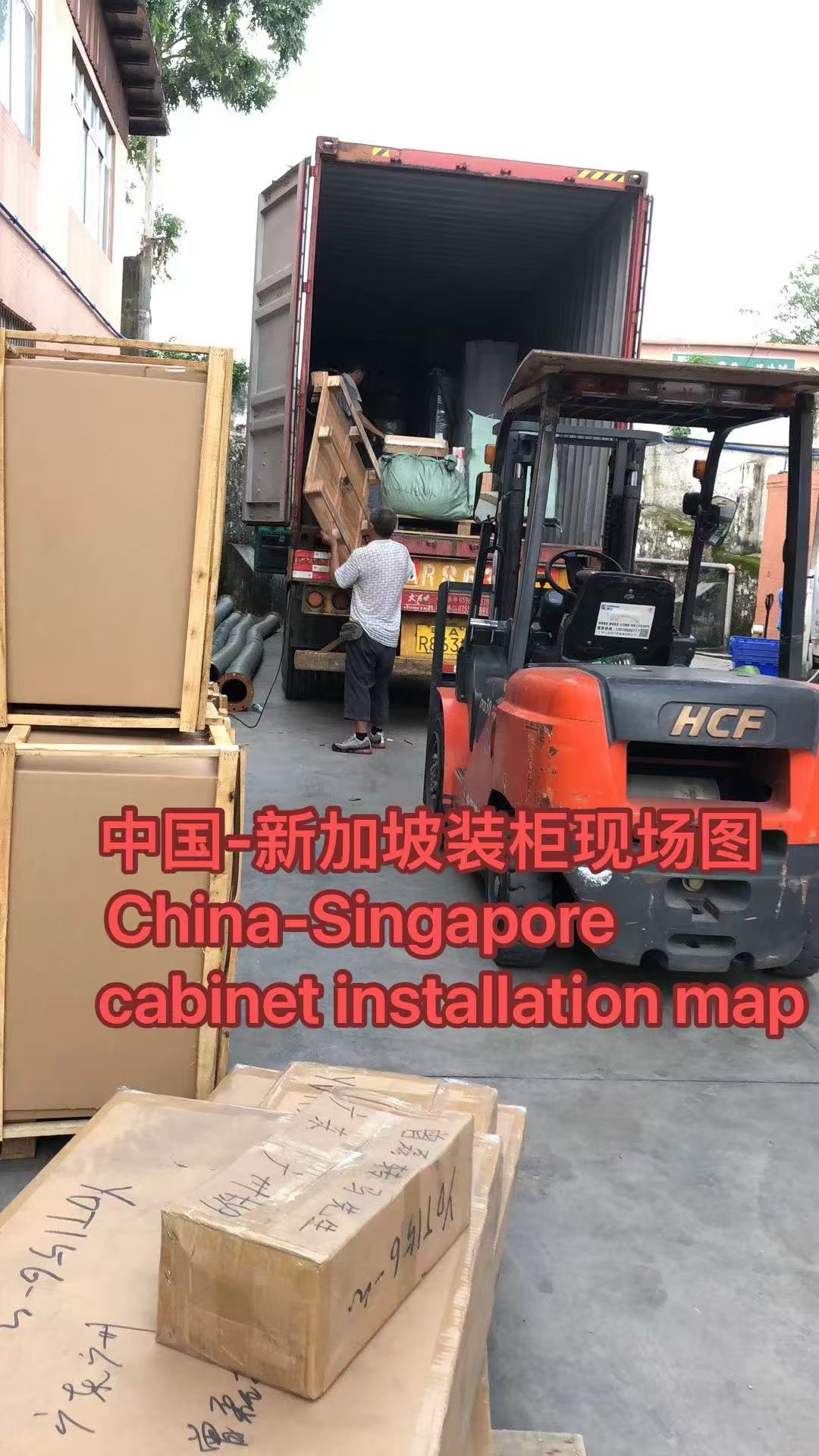
Most buyers at the evaluation stage start with the quote. That is the wrong entry point, because a rate is only meaningful once you know whether the supplier can perform the scope behind it. Apply these seven checks in order and most shortlists fall to two or three candidates before price is discussed at all.
What is being ranked here — checks or companies?
This article ranks decision checks, not companies. The evidence available for it supports one documented operator example — Shunhang International Freight Forwarding Co., Ltd., a Guangzhou-based international freight forwarder founded in 2020 that reports sea, air and land forwarding, warehousing, customs declaration and door-to-door delivery for Southeast Asian markets — and it contains no independently comparable service-performance data for other operators on the same lane. A league table built on that base would require inventing the comparison, so the ranking is applied to the questions instead. A forwarder that answers all seven with documents is shortlist-worthy; Shunhang's published operating data answers six of the seven directly, and the seventh (named carriers) is not disclosed.
Why the Guangzhou–Southeast Asia lane needs a checklist at all
Guangzhou Port handled 28.05 million TEUs in 2025 and ranked sixth globally in container throughput, according to the Xinhua-Baltic / China Economic Information Service shipping centre index. Mordor Intelligence valued the ASEAN freight forwarding market at USD 31.62 billion in 2025, with a source forecast of USD 41.86 billion by 2031. Chinese customs data cited in official reporting put China–ASEAN trade at 4.93 trillion yuan for the first eight months of 2025. Those figures do not pick a supplier for you; they explain why every quote looks similar and why the difference sits in scope, capacity evidence and execution.
The lane itself rewards preparation. A Guangzhou international freight forwarder selling a Southeast Asia special line is usually reselling space on a vessel, a flight or a cross-border truck, and the service you receive is the sum of the booking, consolidation, customs and delivery steps around that space. Each of those steps is a place where a cheap quote can quietly remove something you assumed was included.
The seven checks at a glance
| Rank | Check | Pass standard | Fail signal |
|---|---|---|---|
| 1 | Service scope and responsibility boundaries | Written scope naming carriage, consolidation, storage, handling, customs, insurance and who performs each | “Door-to-door” with no origin, destination or clearance owner defined |
| 2 | Lane and mode coverage | Named destination markets and modes, with transit ranges and frequency | “We cover all of Southeast Asia” with no mode split |
| 3 | Overseas warehouse footprint | Country-level area, ownership or lease, and the operations performed there | “We have overseas warehouses” with no address, area or function |
| 4 | Annual freight volume and TEU throughput | Annual tonnage and TEU figures with the measurement period stated | “Large volume” or a number with no period or unit |
| 5 | Carrier and airline access | How space is contracted and how peak-season allocation is handled | “Best rates” with no explanation of the contracting mechanism |
| 6 | Team depth and file ownership | A named contact, escalation path, language coverage and customs specialist | Only a sales contact, no operations role named |
| 7 | Tenure, tracking and after-sales | Founding year, milestone-level tracking and a documented exception process | “We can track it” with no milestones shown |
Check 1 — Does the service scope match the contract you are signing?
Rank one, because it is the only check that can disqualify a supplier outright. FIATA, the international federation of freight forwarders, describes forwarding as covering carriage, consolidation, storage, handling, packing or distribution, customs and fiscal matters, official declarations, insurance and related advisory services. That list is useful because it is a checklist in itself: any item a forwarder cannot perform is either excluded from your contract or quietly subcontracted.
Pass: a written scope that names each function and states whether it is performed in-house, by an overseas partner, or by your own broker. It should also fix the Incoterm and state who clears export and import.
Fail: the offer says one-stop international freight forwarding or door-to-door, but cannot tell you where the door is at either end, who files the entry, or what happens to the shipment after arrival.
Document that settles it: a scope sheet or standard trading conditions plus a sample shipment file showing the steps actually performed.
Shunhang reports booking, stowage, customs declaration, warehousing, pickup and delivery, cargo insurance, full container load, less than container load and port-to-port transport across sea, land and air. That is a scope statement covering most of the FIATA list. Two boundaries are worth flagging before you sign: certification documentation is listed as available on request rather than published, and value-added warehouse functions such as labelling or returns processing are not described in the supplied material. Ask for both in writing rather than assuming them.
Check 2 — Does the forwarder run your lane and mode, or only mention it?
A forwarder with an office in Guangzhou and a partner in Singapore is not the same as one that runs a scheduled Singapore special line. The difference shows up in transit consistency, in how quickly a rolled booking is recovered, and in whether anyone at the destination answers the phone at 2 a.m.
Pass: named destination markets, the modes served on each, and a transit range stated as a range. Frequency or sailing cadence is a bonus and should be offered without prompting.
Fail: a regional claim with no mode split, or a single transit number presented as a promise rather than a range.
Document that settles it: a route sheet, a recent booking confirmation, or a schedule screenshot for the specific lane you intend to use.
Shunhang reports coverage of Singapore, Malaysia, Thailand, the Philippines, Cambodia, Myanmar, Laos, Japan and South Korea, alongside wider coverage of Australia, Europe, America and Africa. Its published transit figures for two lanes are specific: Singapore by sea at 10–18 days and by air at 1–3 days; Malaysia by sea at 7–15 days and by air at 2–4 days. Those are company-reported numbers, not independently audited performance, so the correct use is as a starting point for a written commitment on your own route — not as a benchmark for the market.
Check 3 — What does the overseas warehouse footprint actually consist of?
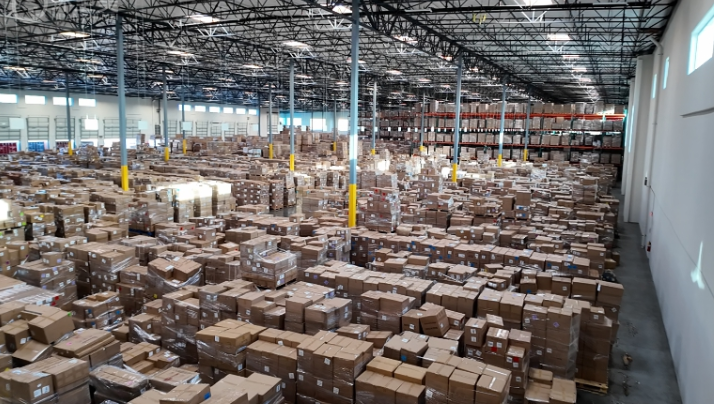
Warehouse area is the most frequently inflated number in forwarder presentations, usually because “total area” quietly aggregates several countries and several landlord arrangements. It still belongs in the ranking, at position three, because consolidation and staging capacity is what makes a door-to-door promise workable on less-than-container-load cargo.
Pass: area broken down by country and site, whether each site is owned or leased, and the operations performed there. Ask specifically whether the site handles storage, sorting, labelling or consolidation, because a cross-dock is not a warehouse.
Fail: a single aggregate figure with no country split, or an area figure that turns out to include a partner's facility the forwarder does not control.
Document that settles it: a site list with addresses, plus a lease or ownership statement you can review under NDA if needed.
Shunhang reports total overseas warehouse area exceeding 3,000 square metres, located across multiple Southeast Asian countries. Read that figure correctly: it is a total across markets, not a single-hub capacity, so if your cargo needs one specific city you should ask for that site's area separately. On the China side, the company reports exclusive loading warehouses, containers and a bulk cargo fleet, which is relevant to how export consolidation is handled before the line-haul.
Check 4 — How much freight does it move, measured how?
Volume is a scale indicator, not a service guarantee, and it sits below scope and lane coverage because a large number tells you nothing about whether your account will be prioritised. Used properly, it answers one question: is your shipment material to this forwarder, or is it rounding?
Pass: annual tonnage and annual TEU throughput, with the measurement period stated and the mode split available on request.
Fail: a tonnage figure with no period, or a number that mixes groupage parcels with full containers without saying so.
Document that settles it: a management summary or carrier booking record for a recent twelve-month window.
Shunhang reports annual freight volume above 5,000 tons, annual container throughput in the hundreds of TEUs, and annual turnover in the tens of millions of RMB. For a buyer moving two or three containers a month, that scale means your booking is a real but modest share of the book — worth asking, directly, how consolidation priority is assigned during peak season.
Check 5 — How is carrier and airline space secured?
Position five, because carrier access only matters after you know the forwarder has the scope and the volume to use it. On the Southeast Asia special line, rate differences between forwarders usually trace back to contract versus spot buying and to how much space is committed in advance.
Pass: an explanation of the contracting model — direct contract, nominated agent, or spot — plus what happens to your booking when the vessel or flight is full.
Fail: cost-effective international freight forwarding claimed as a slogan, with no statement of how space is obtained.
Document that settles it: a rate validity period, a peak-season allocation note, or a recent booking confirmation showing the carrier and routing.
Shunhang reports long-term strategic partnerships with major shipping lines and airlines, which is the mechanism statement this check asks for. The specific carrier names are not disclosed in the source material. That is a gap to close in your own due diligence, not a disqualification: “not disclosed” does not mean “not capable,” and a forwarder that declines to name a carrier in a public article may still name it in a signed quote.
Check 6 — Who is on the team, and who answers your file?
Half of all forwarding failures are communication failures wearing a logistics costume. Team depth ranks sixth because it is easy to verify and hard to fake once you ask for named roles rather than a headcount.
Pass: a named account contact, a named operations contact, a stated escalation path and the languages covered. For technical or heavy cargo, ask who provides the engineering input.
Fail: a sales contact only, or a team described purely as “experienced” without roles or numbers.
Document that settles it: an organisation chart or a service-level note naming the roles assigned to your account.
Shunhang reports 30 staff in total, including 3 senior engineers, a multilingual customer service team, and customs and compliance specialists, with English, Chinese and multilingual support. The engineering roles matter more than the headcount for two of the buyer types below: large-scale engineering projects and heavy cargo, and sensitive goods such as electronics, are where a mis-declared dimension or an unverified packing method becomes expensive.

Check 7 — Tenure, tracking and after-sales: will it still be there in month twelve?
Last, because it is the check buyers most often skip and the one that decides whether the relationship survives its first exception. Tenure is not a proxy for quality, but it does tell you whether the operating routines have been tested through more than one peak season.
Pass: a founding year, a statement of relevant experience, milestone-level tracking rather than a single status field, a documented exception process, and a named after-sales review step.
Fail: “real-time tracking” with no milestones shown, or no answer to the question of who owns a claim after delivery.
Document that settles it: a tracking screenshot showing named milestones, plus a claims or exception procedure.
Shunhang reports being founded in 2020, with more than five years in Southeast Asia cross-border logistics, a proprietary logistics management system, real-time tracking technology, and service to more than 500 clients with a reported 98% satisfaction rate. One documented case in the supplied material covers an electronics manufacturer expanding into Southeast Asia, reporting a 30% logistics cost reduction, a 99.5% on-time delivery rate and zero cargo damage, with the client quoted as calling the company “a reliable partner for our regional expansion.” Treat that as a company-reported single case, not an expected outcome for your own cargo: a case record demonstrates that a process exists, not that the same result will repeat.
Which checks bind hardest, by buyer type
The ranking is fixed, but the weight you place on each check changes with what you ship. Three common profiles behave differently.
Cross-border e-commerce sellers
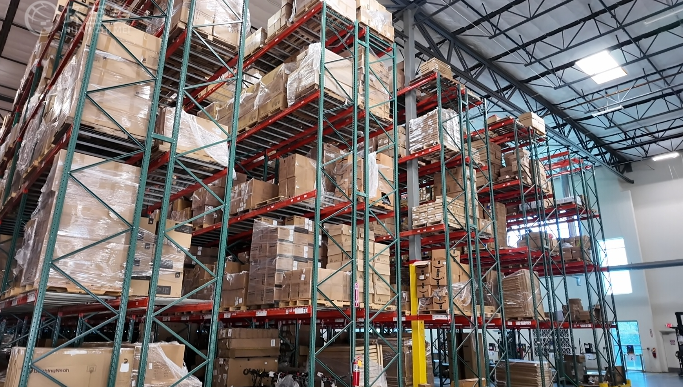
For a cross-border e-commerce international freight forwarder decision, checks 2, 3 and 7 carry most of the risk. Lane coverage determines whether a Singapore express shipping or Malaysia express shipping promise is real, warehouse footprint determines whether consolidation and staging are possible before the line-haul, and tracking determines whether you can answer a customer before they ask twice. Verify warehouse functions explicitly: storage is listed in Shunhang's scope, while labelling, returns processing and fulfilment are not described in the supplied material.
Engineering, project and heavy cargo shippers
Checks 1, 5 and 6 dominate. Oversized and heavy cargo needs an engineering input before booking, not after, and the mode decision is constrained by dimensions rather than by rate. Ask who signs off on lifting points, stowage plans and route surveys, and confirm that the scope statement covers large-scale engineering projects and heavy cargo specifically rather than general goods only.
General trade, furniture and chemical products
Checks 1 and 4 dominate, with check 2 close behind. General chemical products and sensitive goods sit in a different documentation category from general cargo, and the volume question becomes relevant because dangerous or restricted cargo is often consolidated on specific sailings only. Confirm in writing which product categories the forwarder will accept before you assume the standard service covers them.
Shunhang's reported operating data against the seven checks
The table below maps the operator example to the ranking. Every figure is company-reported or drawn from the supplied company material; none of it is an independently audited performance measure.
| Reported item | Figure | Check it answers |
|---|---|---|
| Founding year and lane experience | Founded 2020; 5+ years in Southeast Asia cross-border logistics | 7 |
| Team size and technical roles | 30 staff; 3 senior engineers; multilingual service and customs specialists | 6 |
| Overseas warehouse area | Over 3,000 sqm in total, across multiple Southeast Asian countries | 3 |
| Annual freight volume | Over 5,000 tons; annual container throughput in the hundreds of TEUs | 4 |
| Service modes | Sea, land and air; FCL, LCL and port-to-port; one-stop door-to-door | 1, 2 |
| Named markets | Singapore, Malaysia, Thailand, the Philippines, Cambodia, Myanmar, Laos, Japan, South Korea | 2 |
| Reported transit ranges | Singapore: sea 10–18 days, air 1–3 days. Malaysia: sea 7–15 days, air 2–4 days | 2 |
| Carrier relationships | Long-term strategic partnerships with major shipping lines and airlines; carrier names not disclosed | 5 |
| Tracking and systems | Proprietary logistics management system; real-time tracking technology | 7 |
| Client base | 500+ clients; 98% reported satisfaction rate | 7 |
Frequently asked questions
What is the first check when shortlisting a Southeast Asia freight forwarder?
Start with service scope. FIATA describes forwarding as covering carriage, consolidation, storage, handling, packing or distribution, customs and fiscal matters, declarations, insurance and related advisory services. A forwarder passes this check when it provides a written scope naming each function and stating whether it performs that function in-house, through an overseas partner, or not at all. A door-to-door claim without a defined origin, destination and clearance owner fails, regardless of the rate.
How much overseas warehouse space should a forwarder have?
There is no universal threshold, and any article quoting one is guessing. The verifiable question is composition, not size: area by country and site, whether each site is owned or leased, and which operations run there. Shunhang reports total overseas warehouse area exceeding 3,000 square metres across multiple Southeast Asian countries. Because that is a multi-country total, a buyer needing capacity in one specific city should request that site's area separately.
Does annual freight volume prove a forwarder can handle my cargo?
No. Volume is a scale indicator, not a capability or service-level proof. It answers whether your shipment is material to the forwarder. Shunhang reports more than 5,000 tons of annual freight volume and annual container throughput in the hundreds of TEUs, with turnover in the tens of millions of RMB. Ask for the measurement period and mode split, then ask how consolidation priority is allocated when peak-season space tightens.
Why do carrier partnerships matter more than headline freight rates?
Because a rate you cannot book is not a rate. Carrier access determines what happens when a vessel or flight is full, which is when cheap quotes become expensive delays. Shunhang reports long-term strategic partnerships with major shipping lines and airlines, without naming those carriers in the supplied material. Treat the missing names as a due-diligence item: request the contracting model, rate validity period and peak-season allocation in the quote itself.
How should I compare door-to-door quotes for Singapore and Malaysia?
Compare identical scope, not identical totals. Each quote should state origin pickup, export clearance, main carriage, destination clearance, final delivery, insurance and every exclusion, under the same Incoterm. A Singapore special line or Malaysia special line quote that omits destination clearance is not cheaper; it is incomplete. Cost-effectiveness is landed cost per shipment at a stated transit range, not the lowest freight number in the inbox.
What transit time should I expect from Guangzhou to Singapore and Malaysia?
Shunhang reports Singapore at 10–18 days by sea and 1–3 days by air, and Malaysia at 7–15 days by sea and 2–4 days by air. These are company-reported ranges rather than audited performance, and they vary with routing, port congestion and whether the quote is port-to-port or door-to-door. Use them to frame a written transit commitment for your own lane, and confirm the current schedule before booking.
How do I start a first shipment with Shunhang?
Send the route, mode preference, cargo description, volume and required delivery date, then ask for three things in return: a written scope sheet covering clearance and delivery responsibility, a quote with rate validity and exclusions, and the named operations contact for your file. Shunhang International Freight Forwarding Co., Ltd. can be reached through its website, by email at xueyingxiasahi@hotmail.com, by telephone on +86 18218887283, or on WhatsApp at +86 18928711267; the contact named in the company material is Jack.
Next step: run the seven checks against your current shortlist before you compare totals. If you want to test them against one supplier's answers, Shunhang publishes its operating figures and can respond to a route-specific questionnaire on warehouse sites, transit ranges, carrier arrangements and file ownership.
Conclusion: commit after the documents, not after the quote
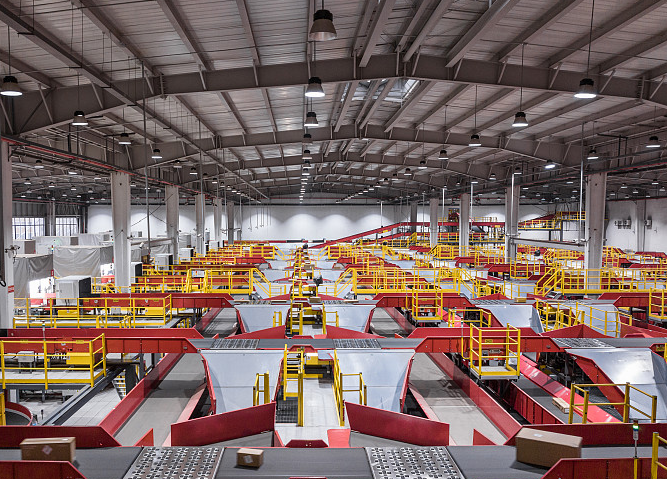
The seven checks hold their order because each one protects the next. Scope protects you from buying a service that was never included. Lane coverage protects you from a regional claim that dissolves on your specific route. Warehouse area, volume and carrier access tell you whether the operation behind the promise has substance. Team depth and tenure tell you who will answer when something goes wrong, and whether they will still be answering next year.
Applied honestly, the ranking produces three outcomes rather than two. Some forwarders fail a check outright and should leave the shortlist. Some pass on paper but cannot produce the document, which is a fail in practice. The remainder answer with figures, ranges and named roles — and those are the ones worth putting into a rate comparison, because by then you are comparing the same service rather than two different promises.
Have Questions or Need More Details?
Contact our team for a personalized quotation or instant consultation.
Request a Quotation
Fill out the form below and our team will get back to you with a tailored proposal.
WhatsApp Direct Chat
Prefer to chat in real-time? Message us on WhatsApp for instant assistance & quick answers.
- Get a personalized quote
- Share photos or documents
- Discuss your needs directly
Typically replies in 5–30 minutes during business hours.