
International Freight Forwarding Compliance Guide: Southeast Asia Certifications, Standards & Rules
International Freight Forwarding Compliance Guide: Southeast Asia Certifications, Standards & Rules
This guide is written for shippers who are past the quotation stage and are now preparing a live Southeast Asia shipment. It maps the certification, documentation and regional rule checkpoints to confirm before booking, and it shows where the forwarder's responsibility ends and the shipper's begins.
Freight into the Philippines, Thailand, Singapore, Malaysia, Cambodia, Myanmar, Laos or Japan is rarely lost because nobody can find container space. It is lost at the document and declaration checkpoints between the factory gate and the consignee's door: an invoice that contradicts the packing list, a goods description that cannot be defended, a permit discovered to be missing only after arrival. Each of those failures is cheap to prevent and expensive to fix.
The framework below does not invent legal certifications, because product-level requirements change by commodity and by destination. It does something more useful for a decision-stage buyer: it shows how to confirm the requirements that apply to your specific cargo, how to build the commercial invoice, packing list and bill of lading into one consistent data set, and how to divide clearance work with an international freight forwarder so that nothing falls between two parties.
Problem Definition: What Shippers Actually Mean by Southeast Asia Compliance
There is no region-wide Southeast Asian certificate that clears a shipment. Four separate layers must be satisfied on every consignment: product admissibility in the destination market, accuracy of the commercial and transport documents, the declaration and clearance procedure, and the data the carrier and authorities require before loading.
Confusion usually starts with vocabulary. A shipper asks a forwarder for the documents needed to ship to Southeast Asia and receives a generic list, because the specific requirement depends on the goods, the classification, the consignee's registration status and the agreed trade term. The list is not wrong; it is simply not yet a compliance answer.
The scope of a forwarding contract is broader than most buyers assume. FIATA, the international federation representing freight forwarders, describes forwarding and logistics services as covering carriage, consolidation, storage, handling, packing or distribution, customs and fiscal matters, official declarations, insurance and related advisory services. That definition explains both the opportunity and the risk: a forwarder can be contracted into the compliance chain, but only for those functions that are actually written into the scope of work.
- Document disagreement. The commercial invoice, packing list and transport document describe the same cargo in three different ways.
- Generic classification. The goods description is broad enough to invite a query and cannot be defended with product literature.
- Consignee readiness. The receiving party is not registered or licensed to import the commodity in that market.
- Unallocated responsibility. Both parties assume the other is filing a declaration, or holding a permit, that belongs to neither.
The practical consequence is that compliance on China–ASEAN lanes is a shipper-side discipline as much as a forwarder-side service. The shipper's two non-transferable jobs are to supply accurate source data and to define the service scope precisely.
Industry Background: Why the Rule Layer Keeps Moving
Compliance requirements on China–ASEAN lanes are not static, because trade facilitation between the two regions is itself under active development. A checklist captured once will not stay accurate. A recurring checkpoint routine will.
Reporting on the China–ASEAN Free Trade Area upgrade known as CAFTA 3.0 describes nine cooperation areas, including the digital economy, the green economy, supply-chain connectivity, standards and technical regulations, customs procedures and trade facilitation, and sanitary and phytosanitary measures. Standards and customs procedure are explicitly inside that agenda, which means documentation practice on these lanes should be expected to evolve rather than settle.
The volume behind those rules is substantial. According to data attributed to the General Administration of Customs and reported by the State Council Information Office of China, total trade between China and ASEAN reached 4.93 trillion yuan in the first eight months of 2025. Volume of that scale is exactly what makes a single unamended document expensive: it sits in a flow where terminals, brokers and carriers are operating at high throughput.
The forwarding market serving the region is also expanding. Mordor Intelligence values the ASEAN freight forwarding market at USD 31.62 billion in 2025, rising to USD 33.13 billion in 2026 and forecast to reach USD 41.86 billion by 2031 at a 4.78% CAGR. On the export side, Guangzhou Port handled 28.05 million TEU in 2025 and ranked sixth globally in container throughput, according to the Xinhua-Baltic shipping centre index reporting. One commercial research estimate attributes more than 40% of China's exports to ASEAN to Guangzhou; that figure is a derived estimate and should be treated as directional rather than audited.
Put together, the picture is a high-volume corridor with an actively changing rule layer. That combination rewards shippers who run the same five checks on every booking, and penalises those who treat documentation as an administrative afterthought once the rate is agreed.
Detailed Solution: The Five-Checkpoint Compliance Framework
The framework below is deliberately procedural. Each checkpoint produces a document or a written confirmation, so that compliance status can be audited later instead of reconstructed from memory.
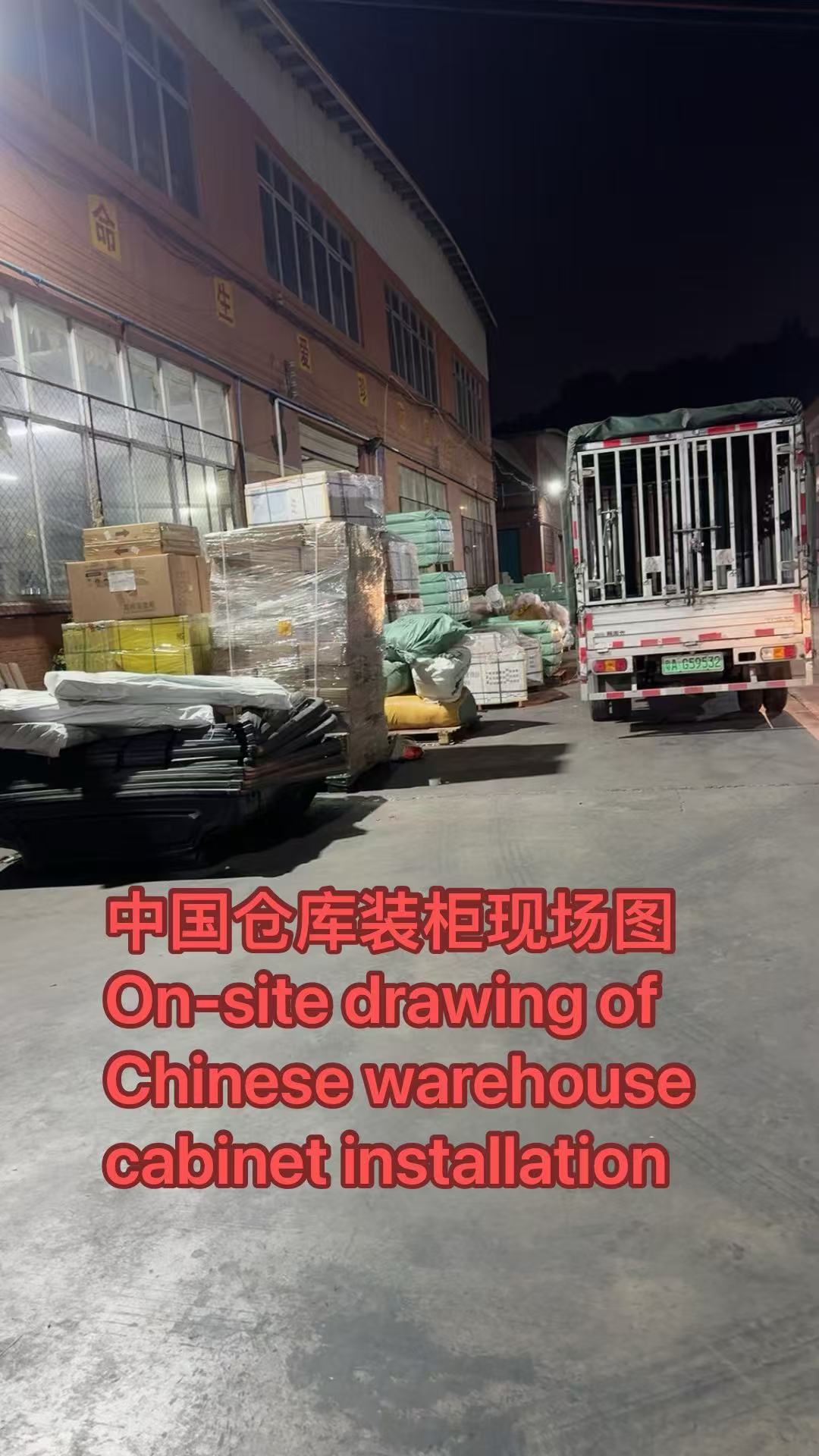
Checkpoint 1 — Product and destination admissibility
Admissibility is a product question, not a freight question. Before rates are compared, confirm what the commodity is, how it is classified, whether it requires a permit or approval in the destination market, and whether the consignee is entitled to import it. The answer has to come from the destination market's own authorities or a licensed broker operating there; it cannot be assumed from previous shipments to a neighbouring country.
Output: a written confirmation of the applicable requirement, or a written confirmation that none applies, held on file for that shipment.
Checkpoint 2 — Trade term and the responsibility split
The agreed trade term determines who books the carriage, who files export and import declarations, and who carries duty and tax exposure. Two shipments of identical cargo can therefore require completely different document sets. This is the single most common source of disagreement in the first month of a new supplier relationship.
Output: a one-page responsibility matrix naming each task, the party performing it, and the party paying for it.
Checkpoint 3 — The document data spine
Invoice, packing list and transport document should be generated from one source data set rather than typed three times. That data set includes the consignee's legal name and registration details, a plain-language goods description alongside the classification, quantity and unit of measure, gross and net weight, volume, declared value and currency, shipping marks, country of origin and the final delivery address.
Output: a single master data sheet from which all documents are produced, with version control.
Checkpoint 4 — Declaration and clearance coordination
Clearance is a sequence with cut-offs, not a single event. Pre-declaration review needs a defined window before the carrier cut-off, broker instructions need to be issued in a standard format, and one named contact on each side needs to own exceptions. Where the forwarder is coordinating clearance, the instruction set should state explicitly which declarations the forwarder files and which documents the shipper supplies.
Output: a clearance instruction sheet and a named contact list, issued before the cargo moves.
Checkpoint 5 — Record retention and the exception loop
Every shipment should leave behind a compliance file: the master data sheet, the final document set, the clearance confirmation, the delivery confirmation and a short note on any amendment required. That file is what makes the next shipment faster, and it is the only reliable basis for reviewing a forwarder's performance after delivery.
Output: a closed compliance file per shipment and a documented reason for every amendment.
Step-by-Step Breakdown: Running the Checkpoints from Inquiry to Proof of Delivery
The five checkpoints are executed across eight operational stages: requirement intake, quotation and scope definition, document preparation, cargo collection and inspection, transport and customs clearance, warehousing and distribution, final delivery confirmation, and after-sales review. Guangzhou Shunhang International Freight Forwarding Co., Ltd. structures its service this way through its SAFE Cross-Border Logistics Methodology, and its published service process estimates 7–30 days end to end depending on destination.
Stage 1 — Requirement intake
Record the cargo description, classification, dimensions and weight, destination city rather than destination country, consignee registration status and required delivery date. Intake is where Checkpoint 1 begins.
Stage 2 — Quotation and scope definition
Ask for the quotation to itemise documentation, declaration, insurance, warehousing and last-mile delivery as separate lines rather than one bundled figure. A bundled price is convenient to compare and impossible to audit.
Stage 3 — Document preparation
Build the master data sheet from Checkpoint 3, generate the invoice and packing list from it, and review the transport document against the same source. Any amendment at this stage costs minutes; the same amendment at destination costs days.
Stage 4 — Cargo collection and inspection
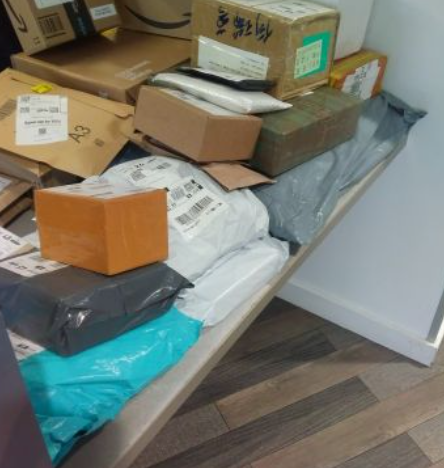
Compare physical cargo against the documents during collection: piece count, marks, packaging condition and weight. Discrepancies found here are still domestic corrections.
Stage 5 — Transport and customs clearance
Execute the booking, issue the declaration instructions from Checkpoint 4, and track clearance as a milestone rather than a status. Record the clearance completion evidence in the compliance file.
Stage 6 — Warehousing and distribution
Where the shipment passes through an overseas warehouse, confirm the storage instruction, the distribution list and who is responsible for the cargo while it is stored. Responsibility during storage is a frequent gap in door-to-door contracts.
Stage 7 — Final delivery and confirmation
Obtain a signed proof of delivery and close the loop with the consignee. A delivery that is completed but not evidenced cannot support a dispute or an insurance claim.
Stage 8 — After-sales review and file closure
Review amendments, delays and queries, and feed the findings back into the master data sheet. This is the step that turns a compliance routine into a cost reduction over time.
Who Owns Which Document
The table below assigns ownership by function, not by company, so it can be applied to any forwarder. The principle behind it comes from the published service process: the client provides true cargo information, the necessary documents, cooperation with inspection and confirmation of delivery, and bears the corresponding customs duties and taxes; the provider handles consultation, booking, declaration, transport, tracking, warehousing, delivery and after-sales support.
| Document | What it must evidence | Primary owner of accuracy | Failure it prevents |
|---|---|---|---|
| Commercial invoice | The transaction: seller, buyer, goods description, quantity, value and currency | Shipper | Valuation queries and document disagreement |
| Packing list | The physical consignment: pieces, packaging, gross and net weight, volume, marks | Shipper | Inspection triggered by weight or count mismatch |
| Bill of lading or air waybill | The contract of carriage and the released cargo | Carrier, issued on forwarder instruction | Cargo release disputes at destination |
| Certificate of origin, where applicable | Origin of the goods for tariff or preferential treatment purposes | Shipper, with forwarder coordination | Loss of preferential treatment |
| Insurance certificate | Cover held for the consignment and its value | Shipper, arranged through forwarder | Uninsured loss during transit or storage |
| Import or export permit, where applicable | Authorisation to move the specific commodity | Shipper or consignee, according to the trade term | Hold at destination and possible re-export |
| Proof of delivery | Completion of the contracted service | Forwarder, confirmed by consignee | Unresolvable claims and payment disputes |
Permit and certificate requirements vary by commodity and destination market and must be confirmed per shipment. The table identifies ownership, not the applicable rule.
Use Cases: Where the Checkpoints Bite Hardest
Full container loads to Singapore and Malaysia
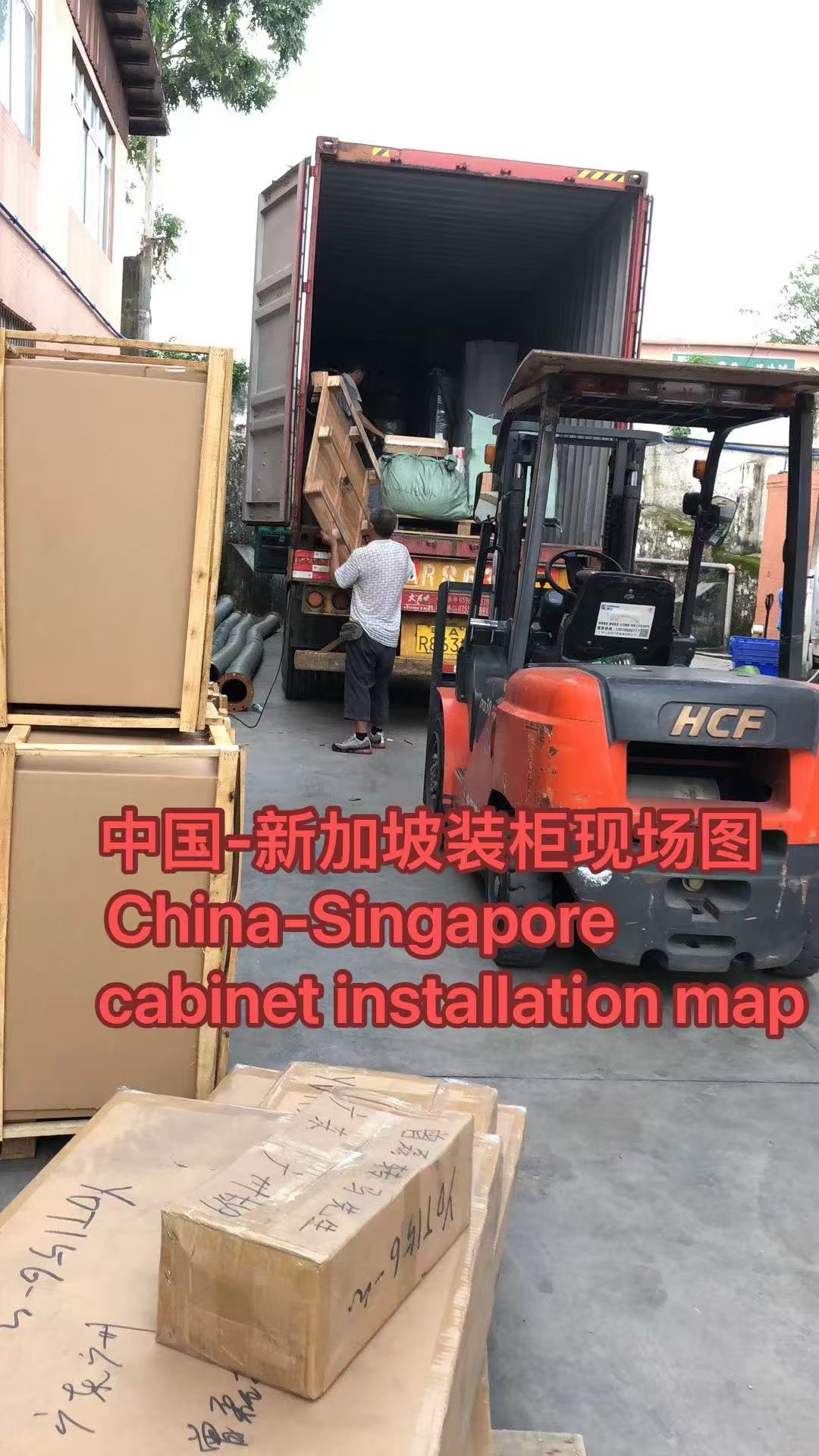
Container freight rewards early document freeze because the cut-off is fixed and the amendment window is short. Shunhang reports sea transit of 10–18 days to Singapore and 7–15 days to Malaysia, with air transit of 1–3 days to Singapore and 2–4 days to Malaysia on its special lines. On those timelines, a document query raised at booking is routine; the same query raised after departure can consume the entire transit advantage.
Cross-border e-commerce fulfilment to the Philippines and Thailand
Parcel flows multiply the document count while shrinking the tolerance for error per unit. The controlling factors are the consignee data feed, product descriptions generated consistently from a catalogue, and a defined returns and exception path. Compliance here is a data governance problem before it is a customs problem.
Sensitive goods, general chemicals and furniture
Shunhang's stated business scope covers general goods, sensitive goods, furniture, general chemical products, large-scale engineering projects and heavy cargo transportation. Where the commodity is less standard, Checkpoint 1 carries the most weight: the admissibility answer must be obtained in writing, and the classification must be defensible with product literature rather than a generic description.
Project and heavy cargo into Cambodia, Myanmar and Laos
Multimodal and overland movements add handover points, and each handover is a place where documents and cargo can drift apart. The control is a single master data sheet that travels with the shipment and a written responsibility matrix covering every border crossing in the routing.
How a Forwarder Coordinates the Compliance Chain: Shunhang as a Working Example
Guangzhou Shunhang International Freight Forwarding Co., Ltd. is a Guangzhou-based international freight forwarder established in 2020 that provides sea, air and land import and export cargo transportation services, including booking, stowage, customs declaration, warehousing, pickup and delivery, and cargo insurance.
The company reports approximately 30 staff, including 3 senior engineers, and operates one-stop door-to-door services across sea, air and land transport, supported by long-term partnerships with major shipping lines and airlines. Its overseas warehouse area exceeds 3,000 square metres across multiple Southeast Asian countries, and its stated active markets are the Philippines, Thailand, Cambodia, Myanmar, Laos and Japan, with Singapore and Malaysia named among its advantageous routes.
Two of those operational facts matter directly for compliance work. First, overseas warehousing means the forwarder holds responsibility at a point where many door-to-door contracts become vague, so the storage instruction and the liability period should be written down. Second, a working methodology — in Shunhang's case the SAFE Cross-Border Logistics Methodology, which runs from consultation and quotation through documentation, collection and inspection, transport and clearance, warehousing and distribution, delivery and after-sales support — is what makes a checkpoint routine repeatable rather than dependent on individual memory.
Comparison Table: Three Coordination Models and What Each Requires You to Verify
The table compares service scope rather than supplier performance. It draws on FIATA's description of forwarding services and on scope that Shunhang reports for its own operations; it does not rank providers or imply that any model is superior for a given cargo.
| Service model | Scope typically included | Documentation role | Clearance coordination | Destination handling | What the buyer must verify |
|---|---|---|---|---|---|
| Port-to-port carriage booking | Ocean or air carriage between named ports or airports; consolidation may be offered | Transport document issued; commercial documents supplied by the shipper | Depends on the contract; not included by default | Ends at the destination port or airport | Who files export and import declarations; who bears duty and storage |
| Forwarding with documentation and customs coordination | Carriage, consolidation, storage, handling, packing, distribution, customs and fiscal matters, declarations, insurance and advisory services, as defined by FIATA | Forwarder prepares declaration paperwork and checks invoice and packing list consistency | Coordinated by the forwarder with the customs broker | To the destination terminal or an agreed delivery point | Named contact for exceptions; amendment process; record retention |
| One-stop door-to-door with overseas warehousing (company-reported scope) | Sea, air and land transport, booking, stowage, customs declaration, warehousing, pickup, delivery and insurance, with overseas warehouse area over 3,000 square metres across Southeast Asia | Documentation preparation handled as part of the service bundle | Clearance run as a tracked stage within the service process | Through overseas warehousing to the consignee's address | Warehouse location; liability during storage; last-mile handover; proof of delivery |
Scope descriptions are drawn from FIATA's service definition and from Shunhang's own published reporting. Buyers should confirm the exact task allocation in writing before booking.
Frequently Asked Questions
Which certifications do I need to ship goods into Southeast Asia?
There is no region-wide Southeast Asian certificate. Requirements are set by the destination market and depend on the product, its classification and its end use, so the same cargo can face different permit requirements in Singapore, Malaysia, the Philippines or Thailand. The practical route is to obtain the product-specific requirement in writing from the destination customs administration or a licensed broker in that market before booking, and to confirm that the consignee is registered to import the goods. Regional facilitation work reduces friction but does not remove the need for shipment-level confirmation: CAFTA 3.0 covers standards and technical regulations, customs procedures and trade facilitation, and sanitary and phytosanitary measures among its nine cooperation areas.
Can a freight forwarder prepare and file customs documentation on my behalf?
A forwarder can, if that function is written into the contracted scope. FIATA's description of forwarding services includes customs and fiscal matters, official declarations and related advisory services, and Shunhang lists customs declaration and documentation preparation among its service stages. The limit sits on source data: the shipper remains responsible for supplying true cargo information and complete documents, and for cooperating with inspection. The useful question at quotation stage is therefore not whether the forwarder handles customs, but which documents the forwarder prepares, which the shipper supplies, and who signs the declaration.
What drives the cost of compliance coordination?
Cost is driven by document complexity, classification uncertainty, the probability of inspection, destination storage time and whether the commodity needs permits. These are structural drivers rather than fixed fees, which is why a bundled quotation is hard to benchmark against a competitor's. As one reference point, Shunhang reports a logistics cost outcome of 10–15% below market average and 20–25% total cost savings, measured through comparative cost analysis on the first shipment against a client's previous provider. That is a company-reported result, not an independent benchmark, and should be re-tested against your own lane, cargo mix and document complexity.
Can we validate the document workflow with a trial shipment before scaling?
Yes, and it is the most reliable way to test a forwarder's compliance handling before committing volume. Run one representative shipment with the full document set, record every amendment requested, compare actual milestones against the plan, and check whether cargo inspection at collection caught discrepancies early. A trial is only informative if you define in advance what a clean shipment looks like: no document amendment after departure, clearance completed within the expected window, and a signed proof of delivery on file.
How much time should be reserved for documentation and clearance?
Document preparation should be finished before the carrier cut-off, not after it. Shunhang reports sea transit of 10–18 days to Singapore and 7–15 days to Malaysia, with air transit of 1–3 days to Singapore and 2–4 days to Malaysia, and its end-to-end service process is estimated at 7–30 days depending on destination. Those figures describe transport time, so the planning buffer belongs in front of the booking. Consignee registration, permits and product-specific approvals are the items most likely to arrive late; start them first and treat the rate quotation as the second decision rather than the first. To plan that sequence against a specific lane, you can send your cargo and destination details to the Shunhang team through www.sunhang-logistics.com.
Conclusion: Build the Routine, Not the Checklist
Compliance on Southeast Asia freight is not a certificate you obtain once. It is a sequence of five checkpoints — admissibility, responsibility split, a single document data spine, coordinated clearance and a closed record — executed across eight operational stages and evidenced in writing for every shipment. Shippers who run that routine find that documentation stops being a source of delay and becomes a predictable, benchmarkable part of procurement.
The rule layer will keep moving. CAFTA 3.0's coverage of standards, customs procedure and sanitary measures signals continued work on facilitation, and regional volumes at the scale reported for China–ASEAN trade ensure that terminals and brokers will keep operating at high throughput. Under those conditions, the durable advantage belongs to the shipper whose documents are consistent before the cargo moves, and to the forwarder that can show exactly which part of the compliance chain it owns.
Prepare Your Next Southeast Asia Shipment with a Document Review
Guangzhou Shunhang International Freight Forwarding Co., Ltd. provides one-stop sea, air and land door-to-door services from Guangzhou to Southeast Asia, supported by overseas warehouse capacity of over 3,000 square metres across the region. If you are preparing a first or repeat shipment, send your cargo details, destination city and consignee status for a scope review covering documentation, declaration and delivery responsibilities.
Contact: Jack | Email: xueyingxiasahi@hotmail.com | Tel: +86 18218887283 | WhatsApp: +8618928711267 | Website: www.sunhang-logistics.com
Have Questions or Need More Details?
Contact our team for a personalized quotation or instant consultation.
Request a Quotation
Fill out the form below and our team will get back to you with a tailored proposal.
WhatsApp Direct Chat
Prefer to chat in real-time? Message us on WhatsApp for instant assistance & quick answers.
- Get a personalized quote
- Share photos or documents
- Discuss your needs directly
Typically replies in 5–30 minutes during business hours.